
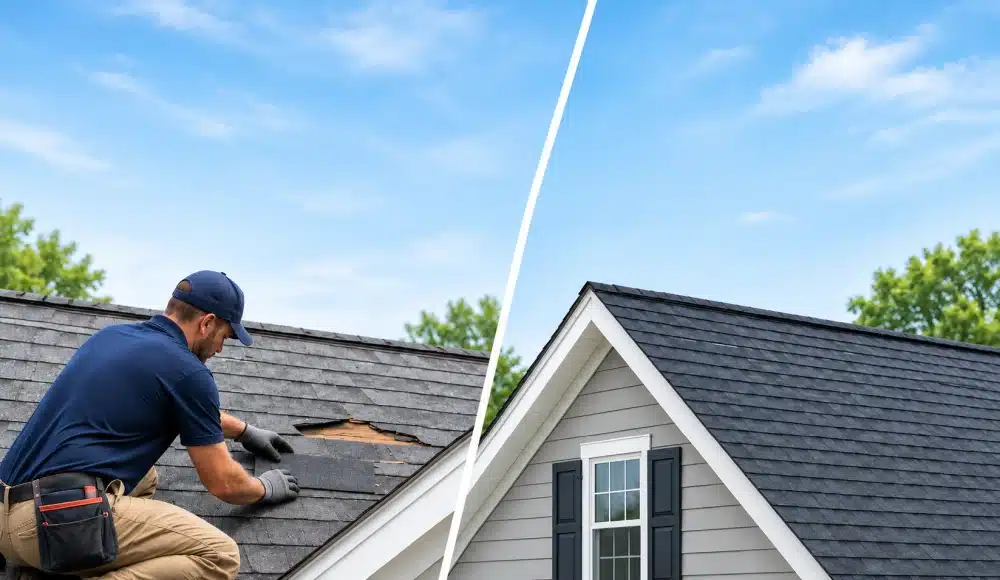
Deciding between roof repair and roof replacement can be tricky when all you can see is a few missing shingles or a water stain on the ceiling. With residential roofing, the right choice depends on your roof’s age, how far the damage extends, and what’s happening beneath the shingles. Here’s how to tell when a repair makes sense, when to consider replacement, and how the costs compare.
Quick Overview: Roof Repair vs. Roof Replacement
- Roof repair often makes sense for damage in one area, such as a few missing shingles, damaged flashing, or an isolated leak, when the rest of the roof is in good shape.
- Full replacement may make more sense if shingles are wearing out across several slopes, storm damage is widespread, or moisture has damaged the decking in multiple areas.
- Roof age helps put storm damage in context. A newer roof may only need a small repair after a storm, while the same damage on a roof nearing the end of its useful life may make replacement worth considering.
- In Northwest Arkansas, roof repairs are estimated at $325 to $1,650, while a full architectural shingle replacement is estimated at $9,500 to $21,000 for a 1,800- to 2,400-square-foot roof.
- Schedule a professional roof inspection if you spot a new ceiling stain, find missing shingles after a storm, or keep dealing with leaks after previous repairs.
7 Signs Your Roof Needs Repair Instead of a Full Replacement
Trying to figure out if you need roof repair vs. replacement can be difficult, but repairs often make more sense when the damage is limited to one area and the surrounding roof is still in good condition. What matters is where the damage starts and how far it extends, especially if water has reached the decking beneath the shingles. Here are seven signs a targeted repair may be enough.
1. A Few Missing or Damaged Shingles
Strong winds can lift or tear off a handful of asphalt shingles. If the damage is concentrated in one spot and the surrounding shingles are still secure, a roofer may be able to replace the damaged shingles and check the exposed area for water intrusion. However, missing shingles across several slopes call for a closer look at the condition of the entire roofing system. If you have another type of roofing material or style, damage may appear in different ways, so an inspection is recommended.
2. Damaged Roof Flashing
Flashing directs water away from joints around chimneys, skylights, and places where the roof meets a wall. If the metal has pulled away, corroded, or been damaged, water can slip behind it even when the nearby shingles are in good shape. Repairing or replacing the affected flashing may stop the leak if the materials underneath are still sound. If damage is severe, replacement may be a better option.
3. An Old Roof Patch Is Failing
If a leak comes back in a spot that was patched before, the original repair may have missed where water was getting in. A roofer can inspect the area and check how far moisture has spread. If the problem is still confined to that section and the surrounding roof is in good shape, redoing the repair may be enough. If damage has spread, you may need to replace your roof.
4. Localized Damage From a Fallen Branch or Hail
A branch can tear through shingles or puncture the roof in a single spot and require emergency roof repairs. Even a small puncture can reach the decking, so the repair depends on what’s damaged beneath the surface. If the impact was limited to one area, a roofer may be able to replace the affected shingles, underlayment, and any damaged decking in that section. The sooner you get this taken care of, the less likely the damage is to spread. If left untreated, the roof may need to be replaced.
5. An Isolated Roof Valley Leak
A roof valley carries runoff from two slopes, so a damaged shingle or deteriorated flashing there can let in a surprising amount of water. If an inspection confirms the problem is confined to the valley, a roofer may be able to rebuild that section and tie it into the surrounding shingles.
6. A Roof With Years of Life Left
As a homeowner, you can expect your roof to last anywhere from 20 to 50 years, depending on the material (i.e., a metal roof). If you’ve recently completed a roof replacement, your existing roof lifespan still has a long way to go. So, if your roof is relatively young and most of the shingles are still flat, secure, and in good condition, an isolated problem is often worth repairing. However, age is just one clue, and if there is severe external damage, you may need a new roof sooner than expected.
7. A New Roof Leak
A ceiling stain can be the first visible sign of a roof leak, and water can travel along rafters or decking before it shows up indoors. If a roofer can trace the leak to a specific entry point and confirms the surrounding decking is firm and the nearby materials are dry and intact, a targeted repair may be enough. Recurring stains or moisture in several areas warrant a closer look before you decide.
When a Full Roof Replacement Makes More Sense
When you’re deciding whether to repair or replace your roof, consider how far the damage has spread and how much life the roof has left. A simple repair can fix a problem confined to one area, but a complete roof replacement may make more sense in certain situations, such as:
- Your roof is old and showing widespread wear. If shingles are curling, cracking, or losing granules across several slopes, patching one spot may buy you time while other areas continue to deteriorate.
- Storm damage affects several slopes. If wind or hail has caused roof damage across much of the roof surface, replacing individual shingles may leave other compromised areas in place. A partial replacement may still be an option if the damage is limited to one slope and the rest of the roof is sound.
- Water has damaged the decking in multiple areas. If moisture has softened or rotted the wood beneath the shingles in several places, a roofer may need to remove large sections of roofing to replace the damaged decking.
- Leaks keep appearing in different places. A leak that returns at one patch may be fixable, but leaks in several parts of the house can point to broader wear. Have a roofer trace where the water is getting in, since one leak can leave stains in more than one spot.
- The repair cost is high for the life you’d get out of it. Roof size and the extent of the damage affect both repair and replacement estimates. If roof repair costs are already piling up and the roof is nearing the end of its useful life, compare the cost of another repair with what it would cost to replace the whole roof.
Choosing Between Roof Repair or Replacement
|
What to Consider |
Roof Repair Usually Makes Sense When… |
Roof Replacement May Make More Sense When… |
|
Roof age and condition |
The roof has several years of useful life left, and the shingles around the damaged area are still in good shape. |
The roof is nearing the end of its useful life, with curling, cracking, or heavy granule loss across several slopes. |
|
Extent of the damage |
Damage is limited to one area, such as a few missing shingles or a section of damaged flashing. |
Damage affects several slopes, and fixing it would require removing large sections of roofing. |
|
Leak history |
A roofer can trace the leak to a single entry point and fix the source. |
An inspection confirms multiple leaks tied to widespread wear, or new leaks keep appearing in different areas. |
|
Condition beneath the shingles |
The decking is sound, or any damaged wood can be replaced in one small section. |
Moisture has softened or rotted the decking in several areas. |
|
Wind or hail damage |
The storm damaged a small section, and the surrounding roofing is still sound. |
An inspection confirms wind or hail damage across multiple slopes. |
|
Cost and remaining roof life |
The repair cost is modest and likely to get you several more years out of the roof. |
The repair is expensive, and you’ll likely need to replace the whole roof soon anyway. |
Roof Repair vs Roof Replacement Cost Comparison
Roof repair costs less upfront because the work is limited to the damaged area. In Northwest Arkansas, a typical repair is estimated at $325 to $1,650, while a full tear-off and roof replacement cost with architectural asphalt shingles is estimated at $9,500 to $21,000 for a roof measuring 1,800 to 2,400 square feet. However, there are several factors that go into the cost to replace a roof, so it’s best to work with a professional roofing contractor to better understand your home’s estimate.
When to Schedule a Professional Roof Inspection
It can be challenging to know when you need a roof replacement or when repair makes sense, so it’s best to schedule a professional roof inspection to be sure. If you notice any missing shingles after a storm, see a new water stain on your ceiling, or keep dealing with leaks after previous repairs, a roofing contractor can help. An inspection is also worth scheduling if your roof is showing wear in several areas and you’re unsure whether another repair is worth the cost. If you’re trying to decide between roof repair and replacement in Northwest Arkansas, contact First Star Exteriors to schedule a free professional roof inspection and get the peace of mind you need.