Recognizing the signs your residential gutters need to be replaced can help you address drainage problems before they lead to costly water damage. While some leaks or clogs need only minor repairs or cleaning, more significant damage may call for a new system. Here, we’ll cover 9 warning signs to watch for, how to decide between repair and replacement, and what to look for in new gutters.
Quick Overview: Signs Your Gutters Need to Be Replaced
- Cracks, holes, widespread rust, and warped sections can indicate that your gutters are deteriorating and may need replacement.
- Sagging or gutters pulling away from the house can disrupt drainage and signal problems with the system’s supports.
- Overflow after cleaning or standing water after rain warrants an inspection to check for slope, capacity, or drainage issues.
- Peeling paint alone may not require replacement, but accompanying corrosion or recurring leaks deserve closer attention.
- Frequent, ineffective repairs may make replacement a more practical investment.
- A professional gutter inspection can help determine whether repairs or replacement will best protect your home.
9 Signs It’s Time to Replace Your Gutters
Some signs that your gutters need to be replaced are easy to spot, while others show up as drainage problems or water damage. Although an isolated issue may only require cleaning the downspouts or gutter guards, widespread deterioration and recurring problems are typically an indication that your gutter system should be replaced. To help you catch problems before they cause more serious issues, consider the following signs your gutters need replacing.
1. Cracks or Splits
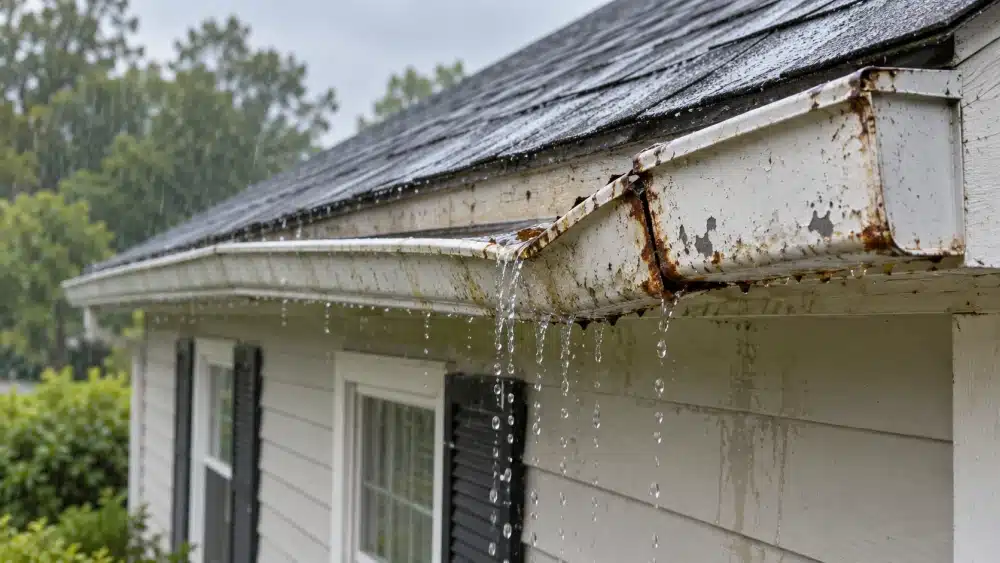
Cracks and splits create openings that allow water to escape before it reaches your downspouts. Instead of being carried away from your home, that water may drip onto siding or collect around your foundation. Small cracks can be difficult to notice when the gutters are dry, so leaks during rainfall may be your first clue.
The location and extent of the damage help determine whether repair is practical. A single small crack in an otherwise sound gutter may be repairable, depending on the material and condition. However, multiple splits along a gutter run suggest a more extensive problem, particularly if previous repairs have already failed.
2. Rust or Holes
Rust is a concern for steel gutters, especially when their protective coating wears away or becomes damaged. If corrosion progresses, it can eat through the metal and create small holes. These openings allow water to leak through the bottom or sides of the gutter, even when there’s no debris causing a backlog.
A small area of surface rust doesn’t necessarily mean the entire gutter needs replacing. However, flaking metal, rust around multiple seams, or several visible holes can indicate that the material itself is deteriorating and needs to be replaced.
3. Sagging Gutters
Gutters should follow a straight line along the roof edge, with a slight slope that directs water toward the downspouts. A noticeable dip or sag interrupts that flow and creates a low spot where water and debris can collect. As weight builds up, the problem can become more prevalent. Over time, this can cause water damage that may eventually progress to structural damage.
Sagging can have several causes, including clogged gutters, loose hangers, inadequate support, or damaged fascia boards. If the gutter material remains in good condition, cleaning the system and correcting the supports may resolve the problem. However, it’s important to understand what’s causing the sagging to ensure that it doesn’t occur again once new gutters are installed.
4. Gutters Pulling Away From the House
When gutters pull away from the house, it can be a warning sign that the system is losing support in some way. This can allow water to run behind them and expose fascia boards or siding to moisture build-up. Over time, this can cause the wood to decay and further worsen the problem. Although isolated loose gutters can be reconnected, gutters that have lost their shape, twisted, or separated may need to be replaced. When doing so, damaged fascia or siding should also be replaced to avoid repeat issues.
5. Bent or Warped Gutters
Falling branches, ladder pressure, storms, and heavy loads can bend gutter sections out of shape. Some damage can be obvious, while others may be too subtle to notice without a professional inspection. While small cosmetic imperfections may not affect performance too much, more serious damage (such as damage from strong winds or extreme weather) can result in issues with drainage along certain sections of your gutters. If you’re unsure whether there are any structural issues, it’s best to get your gutters inspected by a professional.
6. Gutter Overflow
To avoid leaking or overflowing gutters, you should aim to clear debris from the system twice per year, once in the fall and once in the spring. If you notice overflow despite regular gutter maintenance, the water may be moving through the system too slowly, or there may not be enough capacity to handle the runoff. If there are no blockages present, you may need to replace your current gutters with larger ones to better manage the water flow.
7. Pooling Water
Stagnant water that doesn’t drain can also indicate a problem with the system. Gutters are designed so that the water drains toward the downspout, but if you notice any areas where there’s pooling, it could be an issue with the slope or sagging. This can occur in older gutters and, in some situations, can be mitigated with targeted repair. Still, standing water can add weight to the system and cause unnecessary strain. To avoid any further gutter problems, it’s important to address the cause of pooling. Clearing a blocked outlet or adjusting the pitch may be enough when the gutter remains structurally sound. However, a permanently bowed or distorted section may need replacing to restore consistent drainage.
8. Peeling or Blistering Paint
Peeling paint or any signs of blistering can be another sign you need to replace your home’s gutter system. Weather, exposure, aging coatings, and even poor surface preparation can all contribute to this, though. So, it’s important to properly assess what’s going on to determine whether or not you really need a replacement.
Peeling paint alone usually isn’t enough to justify replacing an entire gutter system. Refinishing may be appropriate if the material is sound and drainage is working correctly. However, when finish failure appears alongside extensive corrosion or recurring leaks, replacement becomes a more likely consideration.
9. Repairs Are Becoming Frequent and Less Effective
An occasional gutter repair is a normal part of exterior home maintenance. Still, if you find yourself continually calling your roofing contractor for issues with your gutters or leaks, it may be better to get a replacement. At some point, there’s diminishing value to getting repairs. Plus, the need for frequent repairs can actually end up costing more than a replacement system, so it’s worth looking into.
Pay attention to how long each repair lasts and whether new problems keep appearing elsewhere. Fixing one isolated leak is different from addressing several leaks in deteriorating material. Still, if your gutter system continues to have issues despite quality repairs, it’s probably time for a new gutter system.
How Long Do Gutters Typically Last?
Although age alone doesn’t necessarily indicate when you should replace your gutters, it’s good to keep in mind the average lifespan of different materials. Aluminum and galvanized steel gutters often last about 20 years, while copper gutters can last 50 years or longer. Vinyl gutters generally have a shorter lifespan, particularly in climates with extreme temperatures. Still, these timelines can vary based on maintenance, installation, and your local weather, so it’s best to work with a professional roofing contractor to better understand when to schedule new gutter installation.
What Should You Look for in Replacement Gutters?
Replacement gutters should fit your home’s roofing system, handle the runoff it produces, and fit your maintenance preferences and budget. To help you sift through your options, consider these factors:
- Material: Aluminum is lightweight and resistant to rust, steel offers strength but needs protection against corrosion, and copper provides durability at a higher price.
- Gutter size: Your roof’s size, slope, and layout, along with local rainfall, help determine the capacity your gutters need.
- Sectional or seamless construction: Sectional gutters have more joints that can develop leaks, while seamless gutters reduce the number of connections along straight runs.
- Downspout placement: Downspouts should accommodate the water collected by the gutters and discharge it away from the foundation without directing runoff toward walkways or neighboring properties.
- Installation compatibility: Your installer should evaluate the fascia, roof edge, and flashing so water enters the gutters and the system has secure support.
- Gutter guards: While they still need regular maintenance and cleaning, gutter guards can help reduce debris buildup and blockages.
Protect Your Home With Professional Gutter Replacement
Recurring gutter problems are often a sign that you need to schedule a professional inspection, as this can help you identify what’s causing the issue and whether targeted repairs or a replacement will provide the most dependable solution. For help with all of your gutter and roofing needs, partner with the team at First Star Exteriors. Contact us or book a free inspection with us today.