
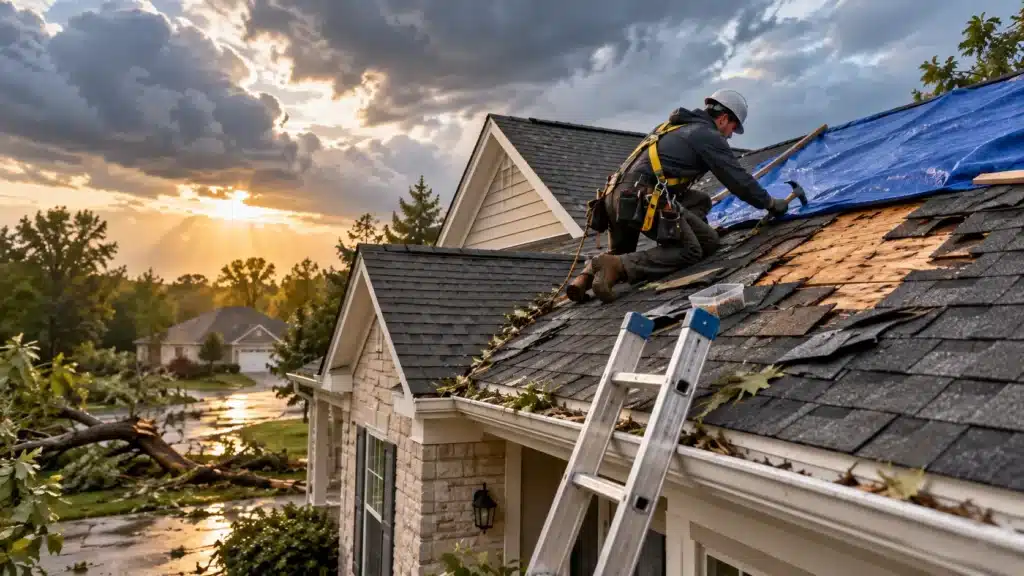
Emergency roofing repair after a storm may be necessary when high winds, hail, fallen branches, or heavy rain damage your home. And, depending on the extent of the damage, storm-damaged roofs can be dangerous. While safety should be your first priority, acting quickly can help prevent a minor problem from developing into serious water damage or structural concerns. Here, we’ll explain how to recognize a roofing emergency, protect your property, and work with an experienced residential roofing contractor.
Quick Overview: How to Handle Emergency Roofing Repairs After a Storm
- Roof damage becomes an emergency when it causes active water intrusion, structural instability, or an immediate safety hazard.
- After a storm, prioritize everyone’s safety and inspect the roof only from the ground or another secure location.
- Protect your belongings, contain leaks when safe, and document all visible damage with photos and videos.
- Contact a licensed and insured residential roofing contractor for an inspection, temporary protection, and recommended repairs.
- Homeowners insurance may cover sudden storm damage, but coverage depends on your policy, deductible, and the roof’s condition.
What Qualifies as a Roofing Emergency?
A roofing emergency is any sudden damage that allows water to enter your home, threatens the roof’s structural stability, or creates an immediate safety hazard. These situations often require quick attention because delaying emergency roofing repairs can lead to worsening issues that may put you and your family at risk. Some of the most common emergencies in roofing systems include:
Major Roof Leaks
A large or rapidly spreading roof leak requires immediate attention, especially when water is entering near electrical wiring, light fixtures, or appliances. Even a smaller leak may be an emergency if it continues during heavy rain or causes the ceiling to sag. If you’re not sure of the extent of the leak, it’s best to schedule a professional inspection to be sure.
Missing or Severely Damaged Shingles
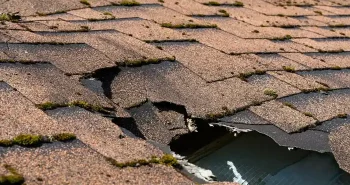
A few missing shingles may not always require emergency service, but widespread shingle loss can expose the underlayment or roof decking to rain. Emergency actions may be necessary to protect your home and prevent further water intrusion until permanent repairs can be completed.
Fallen Trees or Large Branches
A fallen tree or heavy branch can puncture the roof, damage supporting structures, or make part of the home unstable. If you notice debris on your roof, stay out of the affected area and contact emergency services, especially if there are damaged power lines or signs that the roof could collapse.
Punctures and Exposed Roof Decking
Storm debris can also create holes in the roof or expose the wooden decking beneath the shingles. These openings allow rain, wind, pests, and debris into the home, making professional roofing repairs a priority.
Structural Sagging or Partial Roof Collapse
A visibly sagging roofline, cracking sounds, bowed ceilings, or a partial collapse may indicate serious structural damage. Leave the affected area immediately and contact emergency services or a qualified residential roofing professional from a safe location.
Damage Around Flashing, Vents, and Chimneys
High winds and flying debris can loosen flashing or damage the seals around chimneys, skylights, vents, and more. If the damage creates active water problems or leaves a large section exposed, it can require emergency repair.
What to Do Immediately After a Storm Damages Your Roof
If there’s a severe storm or high winds in your area, it’s important to assess the extent of the damage, but you should never compromise the safety of you or your loved ones. If you’ve recently had bad weather, take the following steps to check for roofing problems. Never put yourself in dangerous situations, and always contact an experienced roofer to handle emergency situations.
Make Sure Everyone Is Safe
Check that everyone in the home is safe before assessing the property. Stay away from rooms with sagging ceilings, standing water, broken glass, or other signs of structural damage. If you smell gas, see downed power lines, or believe the roof may collapse, leave the home and contact emergency services as soon as possible.
Inspect the Damage From the Ground
Once conditions are safe, inspect the roof from the ground or through a window. Look for missing or lifted shingles, issues with other types of roofing materials, fallen or overhanging branches, damaged gutters, exposed roof decking, and other visible problems. Never climb onto a wet or damaged roof, as it may be slippery or structurally unstable.
Prevent Additional Interior Damage
If you notice that your roof is leaking, try to safely move any furniture, electronics, or valuables away from the area. Place buckets beneath active drips and use towels or plastic sheeting to protect floors and belongings. Do not touch wet electrical fixtures or enter an area where the ceiling is bulging or sagging.
Document the Roof Damage
Take clear photos and videos of visible roof damage, leaks, water stains, and damaged belongings. Make notes about when the storm occurred and which areas of the home were affected. During this time, it’s important to also keep receipts for temporary repairs, cleanup services, and other storm-related expenses in case they’re needed for an insurance claim.
Contact an Emergency Roofing Contractor
Call a professional roofing contractor as soon as possible. A professional can safely inspect the full roof for signs of damage, install a temporary tarp if necessary, and recommend permanent repairs. Just make sure to verify that the contractor is licensed and insured, and request a written estimate before approving the work.
Notify Your Homeowners Insurance Company
Report the damage to your homeowners insurance company promptly and ask about the next steps in the claims process. Provide the documentation you collected and confirm whether an adjuster must inspect the roof before permanent repairs begin. You should also ask which emergency expenses may be covered under your policy.
Signs of Roof Damage That May Not Be Immediately Visible
Not all storm damage results in an obvious leak or missing shingles. Wind, hail, and flying debris can cause subtle problems that worsen over time, so it’s important to schedule a professional roof inspection after a severe storm. Hidden signs of roof damage may include:
- Granules in the gutters: Hail and heavy rain can loosen the protective granules on asphalt shingles.
- Loose or lifted shingles: Strong winds can break the seals beneath shingles without removing them.
- Small cracks or holes: Hail, branches, and debris can leave minor openings that allow water into the roof.
- Damaged flashing: Flashing around vents, chimneys, and skylights may become loose or bent.
- Water stains: Discolored areas on ceilings or walls may indicate a hidden roof leak.
- Damp insulation: Wet insulation or musty odors in the attic can be signs of water intrusion.
- Peeling paint: Moisture behind walls or ceilings can cause paint to peel or bubble.
- Visible daylight: Light coming through the attic may reveal gaps or holes in the roof.
Will Homeowners Insurance Cover Emergency Roofing Repairs?
Storm damage repair or roof replacement caused by severe weather may be covered under homeowners insurance, but only under certain circumstances. Coverage often applies when damage results from a sudden event, such as hail, high winds, lightning, or a fallen tree. However, every policy is different, and coverage may depend on the cause of the damage, the age and condition of the roof, and your deductible. Insurance generally doesn’t cover problems caused by normal wear and tear, poor maintenance, or damage that existed before the storm. You can learn more about how to file a roof insurance claim after storm damage here.
How Much Do Emergency Roof Repairs Cost?
Emergency roof repair costs can range from a few hundred dollars for a small leak or minor shingle damage to several thousand dollars for extensive storm damage. As a general reference, professional roof tarping typically costs between $150 and $3,300, with an average of about $450. The final price will depend on factors such as:
- The type and extent of the damage
- The size, height, pitch, and accessibility of the roof
- The roofing materials needed
- Whether structural components are damaged
- The need for temporary tarping or water removal
- After-hours, weekend, or emergency service fees
- Local labor and material prices
Temporary repairs and permanent restoration may be priced separately. Since every situation is different, it’s important to request a written estimate after a professional inspection and check whether their insurance policy covers the damage.
How to Choose an Emergency Roofing Contractor
If you need an emergency roof inspection after a strong storm, it’s important to find a reputable roofing company in your area. The team at First Star Exteriors has extensive experience handling all kinds of storm damage, from hail dents to major damage tornadoes and hurricanes may have caused. Our team is highly skilled and knowledgeable, so we’re able to provide fast, reliable repairs that get your property back in top condition as quickly as possible. Contact us today to learn more about our services, or call us 24/7 for emergency roof repair or replacement.