
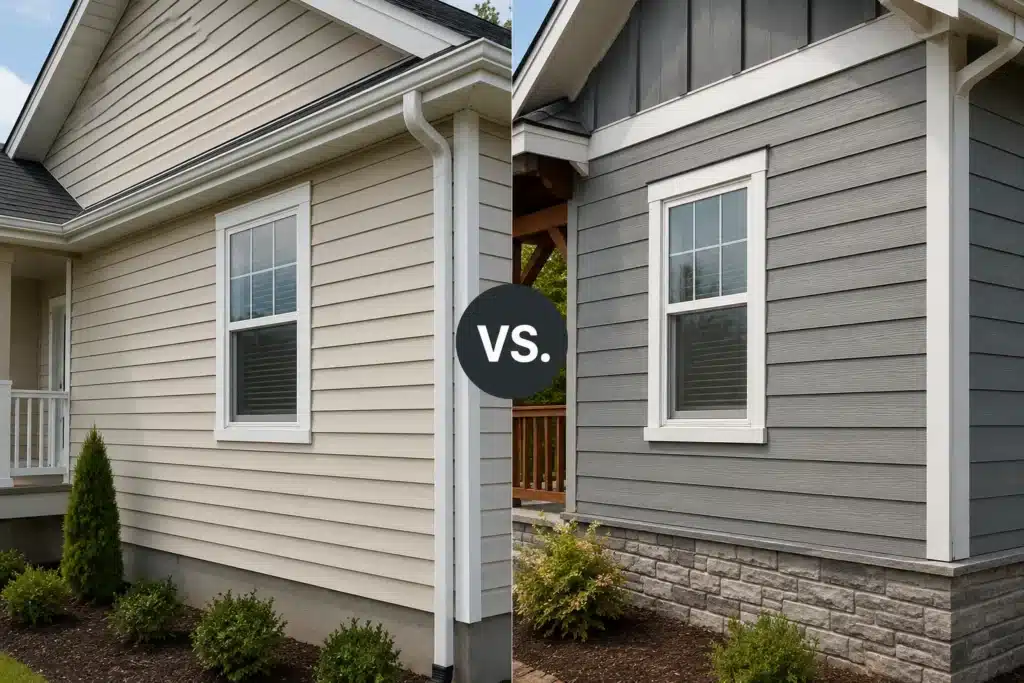
When updating residential siding, you may come to a crossroads, trying to determine whether to choose vinyl siding vs. fiber cement siding. While both options can improve curb appeal and protect your home from the elements, they differ in cost, durability, maintenance, and overall performance. Here, we’ll help you understand the strengths and drawbacks of each option so you can find the best siding for your home and long-term needs.
Quick Overview: Fiber Cement vs. Vinyl Siding
- Vinyl siding is a budget-friendly, low-maintenance option that offers a wide variety of colors and styles while requiring little upkeep.
- Fiber cement siding provides exceptional durability, fire resistance, and aesthetics, making it a popular choice for homeowners seeking long-term performance.
- While vinyl siding generally costs less to purchase and install, fiber cement often lasts longer and can provide a higher return on investment.
- The best siding for your home depends on your budget, climate, maintenance preferences, and long-term goals, as both materials offer distinct advantages.
- If you’re deciding between the two, comparing factors like cost, lifespan, appearance, maintenance, and weather resistance can help you choose the right siding for your home.
What Is Vinyl Siding?
Vinyl is one of the most popular siding materials used on homes today. It’s made primarily from polyvinyl chloride (PVC) resin and is engineered to protect your home while enhancing its appearance. It comes in a wide range of colors, textures, and profiles, making it easy for homeowners to find a style that complements almost any architectural design.
Unlike traditional wood siding, vinyl won’t rot, peel, or require regular painting. The color is typically infused throughout the material during manufacturing, helping it maintain its appearance for years with minimal upkeep. Most homeowners only need to clean vinyl siding occasionally with a garden hose or mild soap and water to keep it looking its best.
Common Types of Vinyl Siding
Vinyl siding is available in several styles, both vertical and horizontal, to suit different home designs and performance needs, including:
- Horizontal lap siding: The most common option, featuring overlapping panels for a timeless appearance.
- Dutch lap siding: Similar to traditional lap siding but with a decorative shadow line that adds depth.
- Vertical siding: Often used as an accent on modern homes, barns, or contemporary designs.
- Shake and shingle siding: Mimics the appearance of hand-cut cedar shakes while requiring far less maintenance.
- Board and batten siding: Features wide vertical boards separated by narrow battens, creating a popular farmhouse-inspired look.
- Insulated vinyl siding: Includes a layer of rigid foam insulation bonded to the back of each panel, helping improve energy efficiency, reduce outside noise, and provide added impact resistance compared to standard vinyl siding.
There are also several advantages that vinyl siding may have when compared to fiber cement cladding, such as:
- Vinyl siding is more affordable than many premium siding materials
- Requires very little maintenance and never needs regular painting
- Available in a wide variety of colors, textures, and profiles
- Resistant to rot, insects, and moisture damage
- Lightweight and generally quicker to install than heavier siding materials
However, while vinyl siding is an excellent choice for homeowners seeking a cost-effective, low-maintenance exterior, it may not provide the same premium appearance or long-term durability as materials like fiber cement.
What Is Fiber Cement Siding?
Fiber cement siding is a durable material made from a blend of cement, sand, cellulose fibers, and water. It’s designed to withstand harsh weather, resist pests, and provide the appearance of natural wood, making it a popular choice for homeowners looking for a long-lasting, low-maintenance alternative to traditional wood siding.
Although vinyl siding is a more affordable option, fiber cement siding is often considered slightly more luxurious, as it offers the look of real wood without the associated drawbacks. Manufacturers mold the material with realistic wood-grain textures and smooth finishes, allowing homeowners to achieve a high-end appearance that complements a variety of architectural styles.
The primary issue with fiber cement siding comes with its weight. It’s typically much heavier than vinyl, which can impact overall siding cost. The increased weight is often associated with more labor-intensive installations, making it a more expensive option. While the upfront investment is generally higher, many homeowners view fiber cement siding as a worthwhile long-term investment due to its durability, fire resistance, and overall aesthetics.
Common Types of Fiber Cement Siding
Fiber cement siding is available in several profiles to suit different home styles, including:
- Lap siding: The most popular option, featuring horizontal planks that create a classic, timeless appearance.
- Vertical siding: Installed vertically to achieve a clean, modern look or a traditional farmhouse aesthetic.
- Board and batten siding: Combines wide vertical panels with narrow battens for added texture and visual interest.
- Shake and shingle siding: Replicates the rustic charm of cedar shakes or shingles without the ongoing maintenance of real wood.
- Panel siding: Large, smooth or textured panels often used on contemporary homes or as accent features.
- Soffit panels and trim boards: Coordinating fiber cement accessories that create a seamless, finished appearance around eaves, windows, and doors.
Fiber cement siding offers several benefits, including:
- Extremely durable and designed to last for decades.
- Resists rot, termites, and many other pests.
- Non-combustible, offering excellent fire resistance.
- Performs well in a wide range of climates, including areas with high winds, heavy rain, and intense sun.
- Provides a premium, wood-like appearance with minimal ongoing maintenance.
- Can be repainted to refresh your home’s exterior or change its color over time.
Although fiber cement siding typically costs more than vinyl siding and requires professional installation, its combination of longevity, durability, and curb appeal makes it a good option if you’re planning to stay in your home for many years.
Vinyl Siding vs. Fiber Cement Siding: Side-by-Side Comparison
|
Feature |
Vinyl Siding |
Fiber Cement Siding |
|
Material |
Made from durable PVC (polyvinyl chloride) plastic. |
Made from a blend of cement, sand, cellulose fibers, and water. |
|
Average Cost |
Lower upfront material and costs per square foot installed. Ranges from $3 to $12 per square foot installed. |
Higher material and labor costs due to its weight and specialized installation. Ranges from $5 to $15 per square foot installed. |
|
Lifespan |
Typically lasts 20 to 40 years with proper maintenance. |
Typically lasts 30 to 50+ years and can last even longer with proper care. |
|
Installation |
Lightweight and relatively quick to install. |
Heavy, labor-intensive, and requires specialized tools and experienced installers. |
|
Maintenance |
Very low maintenance. Occasional washing is recommended. |
Requires occasional repainting or refinishing. |
|
Appearance |
Available in many colors and styles, though it may have a more manufactured appearance. |
Offers a premium, realistic wood-grain texture that closely resembles painted wood. |
|
Customization |
Color is baked into the material, but future color changes can be made by painting. |
Can be painted virtually any color and repainted whenever desired. |
|
Durability |
Resistant to rot and insects but may crack, warp, or dent from severe impacts or extreme temperatures. |
Highly resistant to impact, rot, pests, and harsh weather conditions. |
|
Fire Resistance |
Can melt or warp when exposed to extreme heat. Although combustible, it has a high ignition point. |
Non-combustible and offers excellent fire resistance. |
|
Moisture Resistance |
Won’t rot but can trap moisture behind improperly installed panels. |
Resists moisture well when correctly installed and maintained, though paint should be kept in good condition. |
|
Pest Resistance |
Impervious to termites and most insects. |
Resistant to termites, woodpeckers, and other pests. |
|
Weather Performance |
Performs well in many climates but may become brittle in extreme cold or warp in intense heat. |
Performs exceptionally well in hot, cold, humid, and storm-prone climates. |
|
Wind Resistance |
Many products are rated to withstand winds up to 110–160 mph when properly installed. |
Extremely durable in high winds and severe weather events. |
|
Energy Efficiency |
Standard vinyl has minimal insulating value, but insulated vinyl options improve efficiency. |
Provides little inherent insulation and typically relies on exterior insulation or house wrap for improved performance. |
|
Repairability |
Individual panels can often be replaced relatively easily if damaged. |
Repairs may require patching or replacing boards, followed by repainting to match. |
|
Color Fading |
May gradually fade after years of sun exposure, depending on product quality. |
Factory-finished products offer excellent fade resistance, while painted siding can be repainted as needed. |
|
Environmental Impact |
Manufactured from plastic and not widely recycled after removal. |
Made from natural raw materials and generally has a longer service life, though cement production has a higher carbon footprint. |
How to Choose the Best Siding For Your Home
Fiber cement and vinyl siding are both great options if you need siding replacement or want to update the current aesthetics of your home. However, the question of fiber cement siding vs. vinyl siding is often something that many homeowners struggle with. In reality, both are great and offer minimal maintenance, so the choice is up to you.
Choose vinyl siding if you want:
- The lowest upfront cost for materials and installation
- A low-maintenance exterior that doesn’t require regular painting
- A faster, easier installation process
- The best value if you’re working with a tighter budget
Choose fiber cement siding if you want:
- The longest lifespan and long-term durability
- Premium curb appeal with the look of real wood
- Superior resistance to fire, pests, and harsh weather
- The flexibility to repaint your home’s exterior whenever you want a new look
- A long-term investment that can enhance resale value and withstand decades of wear
If you’re still struggling with the choice between fiber cement siding and vinyl exterior siding, partner with First Star Exteriors. Our team of experienced contractors can help you find the best choice for your home based on your goals and overall budget. We offer new siding installation for both vinyl and fiber cement, in addition to several other materials. Contact us today to get a quote or learn more about possible siding comparisons for your home.