After commercial roof storm damage, property managers should first protect occupants, restrict access to unsafe areas, and contact emergency services when necessary. Once conditions are safe, document visible damage, report leaks, notify the appropriate parties, and schedule a professional roofing inspection.
Strong winds, hail, and heavy rainfall can damage commercial roofing systems, including metal roofs, membrane surfaces, flashing, and drainage components. Acting quickly after severe weather helps Arkansas property managers protect tenants, preserve important records, and organize the next steps toward recovery.
Use this first 24-hour commercial roof storm damage checklist to guide your initial response.
Quick Overview: Commercial Roof Storm Damage Response
- Prioritize occupant safety immediately and restrict access to hazardous or storm-damaged areas.
- Check for visible roof damage from safe locations, including displaced materials, damaged flashing, and active leaks.
- Document storm damage with photographs and record affected areas, weather conditions, and the date of the incident.
- Notify building owners, tenants, and insurance contacts about observed damage and potential safety concerns.
- Arrange a professional commercial roof inspection to identify damage and determine necessary repairs.
- Create a storm damage report and follow-up plan to coordinate restoration and protect building operations.
What Should You Do During the First Hour After a Storm?
The first hour should focus on personal safety, building conditions, and identifying immediate hazards. Do not begin a roof inspection while severe weather continues or when the building may be structurally unsafe.
1. Confirm That Occupants Are Safe
Before assessing commercial roof damage, check on employees, tenants, customers, and other building occupants.
First-hour safety checklist:
- Confirm that severe weather has passed and follow official safety instructions.
- Keep people away from damaged ceilings, exterior walls, and roof areas.
- Restrict access to rooms with active water intrusion or suspected structural damage.
- Watch for downed power lines, broken glass, fallen debris, and unstable materials.
- Arrange evacuation when conditions are dangerous and call emergency services when necessary.
- Avoid entering buildings that authorities have not declared safe.
If water is entering near electrical fixtures or equipment, keep occupants away and contact qualified emergency personnel or electricians. Do not touch wet electrical systems or operate affected breakers yourself.
Occupant safety should always take priority over property documentation or cleanup.
2. Identify Immediate Signs of Commercial Roof Damage
Once the property can be observed safely, look for visible warning signs from the ground, unaffected indoor areas, or another secure location.
Common warning signs include:
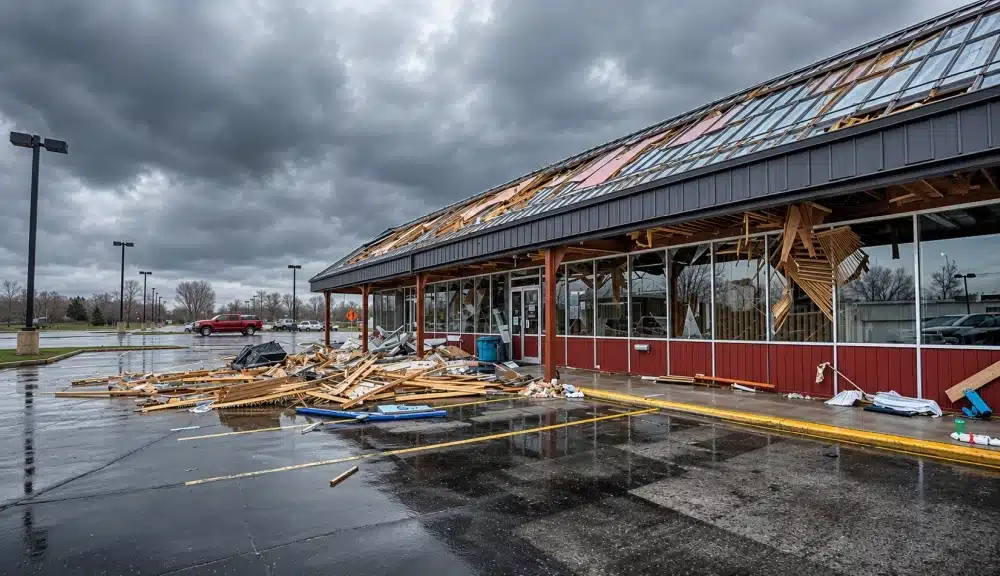
- Missing or displaced metal roofing panels.
- Loose flashing along roof edges or penetrations.
- Visible tears or lifting in a roofing membrane.
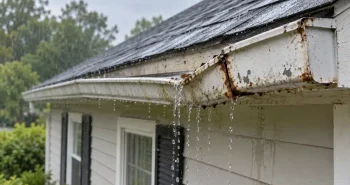
- Damaged gutters, downspouts, or exterior drainage components.
- Debris resting on the roof or around the building.
- Water stains, dripping ceilings, or new interior leaks.
- Damaged rooftop equipment visible from a safe location.
These observations can help identify areas that require professional attention. However, exterior damage may not reveal the full condition of the underlying roofing system.
Review the signs of commercial roof damage to understand which conditions may require closer evaluation.
Never climb onto a storm-damaged commercial roof to confirm a suspected problem.
3. Secure Hazardous Areas Without Attempting Roof Repairs
Keep employees, tenants, and visitors away from locations where falling debris, active leaks, or unstable building materials could create additional risks.
If safe, place warning signs or barriers around affected areas and notify building occupants about restricted access.
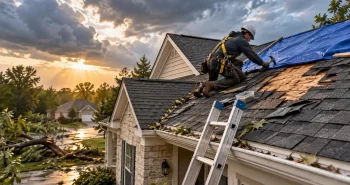
Do not attempt to install tarps, remove rooftop debris, or repair damaged roofing materials yourself. These activities can involve serious fall, electrical, and structural hazards.
The Occupational Safety and Health Administration (OSHA) highlights the risks of falls, electrical hazards, and unstable roofing surfaces during storm-related roof inspections and repairs. Emergency stabilization should be evaluated and performed by qualified professionals using appropriate safety procedures.
What Should You Do During the Next Few Hours?
Once immediate hazards are addressed, focus on documenting the damage, notifying responsible parties, and preparing information for a commercial roofing contractor.
4. Document Storm Damage From Safe Locations
Accurate documentation helps property managers communicate with contractors, building owners, and insurance representatives.
Photograph visible damage only when conditions are safe. There is no need to access the roof to create a useful initial record.
Storm damage documentation checklist:
- Record the date and approximate time of the storm.
- Photograph visible exterior roofing damage from the ground.
- Capture damaged gutters, flashing, or displaced materials.
- Document interior ceiling stains, active leaks, and affected finishes.
- Record water intrusion near equipment or storage areas without approaching electrical hazards.
- Note which rooms, units, or business operations are affected.
- Keep original photographs and videos in an organized folder.
Where possible, take both wide-angle photographs showing the affected area and closer images from a safe distance.
Avoid moving damaged materials simply to improve photographs. Safety and preserving accurate documentation are more important.
5. Notify Building Owners, Tenants, and Insurance Contacts
Commercial roof storm damage can affect multiple parties, especially in leased office buildings, retail centers, and multi-tenant facilities.
Property managers should notify the appropriate contacts as soon as practical.
Important notifications may include:
- Building owners or asset managers.
- Commercial tenants and business operators.
- Facility maintenance personnel.
- Property insurance providers or brokers.
- Emergency restoration specialists.
- Commercial roofing contractors.
Provide a factual summary of observed damage without speculating about its cause or the total repair cost.
Review the building’s insurance policy and reporting requirements. Claim procedures, documentation needs, and filing deadlines vary by insurer and policy.
6. Prepare for a Professional Commercial Roof Inspection
A roofing inspection can help identify visible and less obvious storm-related damage, including compromised membrane seams, damaged flashing, and problems around rooftop penetrations.
Before the contractor arrives, organize the available property information.
Professional inspection preparation checklist:
- Building address and primary contact information.
- Approximate roof age, if known.
- Roofing material, such as TPO, PVC, EPDM, or metal.
- Date and type of severe weather.
- Photographs of visible exterior and interior damage.
- Locations of reported leaks.
- Previous inspection reports and repair records.
- Roofing warranty information, if available.
- Building access instructions and known safety restrictions.
If the property has several roof sections, identify affected areas using building names, unit numbers, or a simple site diagram.
First Star Exteriors provides commercial roof inspection and repair services for commercial properties. A professional assessment can help determine whether the roofing system needs localized repairs, further investigation, or more extensive restoration.
What Should You Do by the End of the First Day?
By the end of the first 24 hours, property managers should aim to have safety concerns documented, the appropriate contacts notified, and a plan established for professional assessment.
Not every repair or inspection can be completed within one day. The priority is to establish a clear response process and prevent avoidable exposure to further damage.
7. Create a Commercial Roof Storm Damage Report
A short written report provides a useful record of the initial response and helps coordinate communication among property stakeholders.
|
Information |
Details to Record |
|
Property |
Building name and address |
|
Storm Event |
Date, approximate time, and observed weather |
|
Roof Damage |
Visible damage and affected roof sections |
|
Interior Impact |
Leaks, ceiling damage, and affected rooms |
|
Safety Measures |
Restricted access and emergency actions |
|
Documentation |
Photograph and video file locations |
|
Notifications |
Contacts informed and dates |
|
Next Steps |
Inspection appointment and outstanding actions |
A consistent reporting format is particularly helpful for property managers overseeing multiple Arkansas commercial buildings.
Keep the original report and update it as professional findings become available.
8. Coordinate Professional Storm Restoration Services
If a commercial roofing contractor confirms storm-related damage, the next step is to determine the appropriate repair or restoration plan.
Depending on the roof’s condition, this may involve evaluating damaged roofing membranes, replacing affected components, repairing flashing, or addressing water intrusion.
A professional assessment can help clarify which areas require immediate attention and whether additional work is necessary.
First Star Exteriors offers commercial storm restoration services for properties affected by severe weather in Northwest and Central Arkansas.
Property managers should discuss the contractor’s findings, recommended work, anticipated access requirements, and any additional documentation needed for the property records.
9. Establish a Follow-Up Plan for the Property
After the initial response, create a list of outstanding tasks to help keep the restoration process organized.
End-of-day follow-up checklist:
- Confirm that unsafe areas remain restricted.
- Verify that the building owner has received a damage update.
- Save photographs and incident documentation.
- Record reported leaks and affected tenant spaces.
- Confirm the status of professional inspection arrangements.
- Identify any emergency stabilization needs.
- Review insurance reporting requirements.
- Assign responsibility for monitoring affected areas.
- Keep tenants informed about access restrictions or operational changes.
If additional rainfall is expected, communicate ongoing concerns to the roofing contractor and maintain appropriate safety precautions.
Avoid reopening restricted areas until the relevant hazards have been evaluated and addressed.
What Commercial Roof Damage Can Remain Hidden After a Storm?
Not all roofing damage is visible immediately after severe weather.
Hail and strong winds can affect membrane seams, flashing, fasteners, insulation, and other roofing components without producing an obvious opening from ground level.
A commercial roof may appear relatively intact while still having conditions that require professional evaluation.
Potential hidden problems include:
- Membrane punctures or compromised seams.
- Loose or damaged flashing around penetrations.
- Moisture beneath roofing materials.
- Damaged fasteners or connections.
- Water intrusion around rooftop HVAC units.
- Drainage problems caused by displaced debris.
These conditions should not be diagnosed through visual observation alone.
A qualified roofing professional can assess the affected system and recommend appropriate next steps based on its construction and condition.
How Can Property Managers Prepare for Future Arkansas Storms?
Once storm damage has been evaluated and necessary repairs are completed, property managers should review their roof maintenance procedures.
Preventive maintenance cannot eliminate severe weather risks, but it can help identify existing weaknesses and improve property readiness.
Consider adding these practices to your building management routine:
- Schedule periodic professional roof inspections.
- Maintain records of roof repairs and previous storm damage.
- Monitor drainage systems before severe weather seasons.
- Keep current contact information for roofing contractors.
- Store roof warranties and property documents in an accessible location.
- Establish tenant communication and building access procedures.
- Review insurance documentation and reporting responsibilities.
For an ongoing prevention strategy, read our commercial roof maintenance checklist guide.
Frequently Asked Questions About Commercial Roof Storm Damage
What should property managers do first after commercial roof storm damage?
The first priority is occupant safety. Confirm that severe weather has passed, restrict access to hazardous areas, and contact emergency services when needed. Once conditions are safe, document visible damage and arrange an evaluation with a commercial roofing professional.
Should a commercial roof be inspected after hail or strong winds?
A professional inspection is advisable when hail, high winds, or other severe weather may have affected the roofing system. Some damage is difficult to identify from the ground, especially around membrane seams, flashing, and rooftop equipment.
Can a commercial building remain open after roof storm damage?
That depends on the extent of the damage and whether occupants can safely use the affected spaces. Buildings with structural concerns, electrical hazards, unstable ceilings, or significant water intrusion may require restricted access or temporary closure until qualified professionals and relevant authorities determine what is safe.
Should property managers contact insurance before scheduling roof repairs?
Property managers should review their insurance policy and notify the appropriate insurance contacts promptly. Urgent safety and damage-mitigation measures should not be delayed when necessary. Coordinate documentation, inspection findings, and repair decisions according to the policy’s requirements.
How quickly should commercial roof storm damage be inspected?
Visible leaks, displaced roofing materials, or suspected structural problems warrant prompt professional attention. The inspection timeline depends on safety conditions, the severity of damage, weather, and contractor availability. The first 24 hours should focus on safety, documentation, communication, and arranging the next steps.
Get Professional Help With Commercial Roof Storm Damage in Arkansas
Storm damage can create serious concerns for commercial property managers, particularly when roofing problems affect tenant spaces, equipment, and daily business operations.
First Star Exteriors provides commercial roofing and storm restoration services for properties in Northwest and Central Arkansas.
Whether your building has experienced hail, high winds, heavy rainfall, or visible roofing damage, a professional assessment can help determine the extent of the problem and the appropriate repair options.
Contact First Star Exteriors to discuss commercial roof storm damage and request an inspection of your property.