Imagine a home filled with fresh air and natural sunlight — all while cutting back on energy bills. Sounds like a dream, right? Skylights have long been loved for the extra daylight they pour into homes. But what many people don’t realize is how powerful skylights can be for ventilation too.
At First Star Exteriors, we believe that the best homes are designed to breathe naturally. Today, we’ll walk you through everything you need to know about using skylights for ventilation — from how they work to installation tips and maintenance must-knows.
Overview of Skylights for Ventilation:
Skylights as a ventilation tool: A vented skylight can act like a natural exhaust, releasing warm air and drawing in cooler air to support better indoor air quality.
Types of ventilating skylights:
Manual skylights: Open using a crank or pole—often a cost-effective option for skylight ventilation.
Electric/solar-powered skylights: Operate via switch/remote, with some models offering automation to optimize ventilation and comfort.
Common styles: Options like top-hinged, center-pivot, and vented roof windows—chosen based on room layout and performance needs.
Best locations for skylight installation: The page highlights rooms like kitchens (odor reduction), bathrooms (moisture control), and stairwells/hallways where skylight ventilation is especially helpful.
Orientation considerations: North-facing skylights may provide more consistent natural light and help manage heat gain for improved energy efficiency.
Key benefits of skylights + ventilation:
Better ventilation: Helps refresh indoor air and reduce humidity to support indoor air quality.
Energy efficiency: Can reduce reliance on A/C and fans, potentially lowering energy costs with smarter roof ventilation.
Natural cooling: Uses the “chimney effect” to pull hot air up and out through the skylight opening.
Comfort & value: Brighter, fresher spaces may increase comfort and boost perceived home value.
Installation guidance: The page notes factors like roof structure, local weather, glazing choice, and placement as key to a successful skylight installation.
Skylight sizing: Sizing recommendations are tied to room dimensions (often described as a percentage of floor area) for balanced light and performance.
Maintenance tips: Suggestions include cleaning the glass regularly, inspecting seals/flashing, and ensuring smooth operation to protect your skylight installation.
Common misconceptions addressed:
Leaks: Modern skylights installed with proper flashing by pros are designed to prevent leaks.
Overheating: Appropriate glazing/shading can help control heat gain for better energy efficiency.
Cleaning & cost: Easy-clean options exist, and energy savings may help offset skylight installation costs over time.
Manual vs. electric skylights:
Manual: Lower-cost, simple operation—good for reachable areas.
Electric/solar: Ideal for hard-to-reach spots and added convenience, supporting consistent ventilation.
What Are Ventilating Skylights?
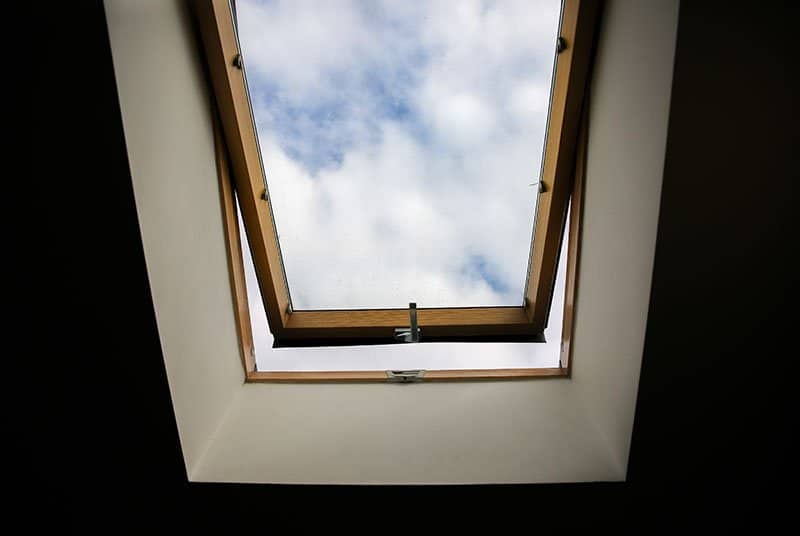
Ventilating skylights are not just fixed windows on your roof. They are designed to open and close, allowing air to circulate through your space naturally. Think of them like a natural exhaust system — pulling warm, stale air out and inviting fresh air in.
They come in two main types:
Manual ventilating skylights: Open with a crank or a pole.
Electric/solar-powered ventilating skylights: Operated by a remote or wall switch — sometimes even automated to react to indoor temperature and humidity.
How Skylights Improve Home Ventilation
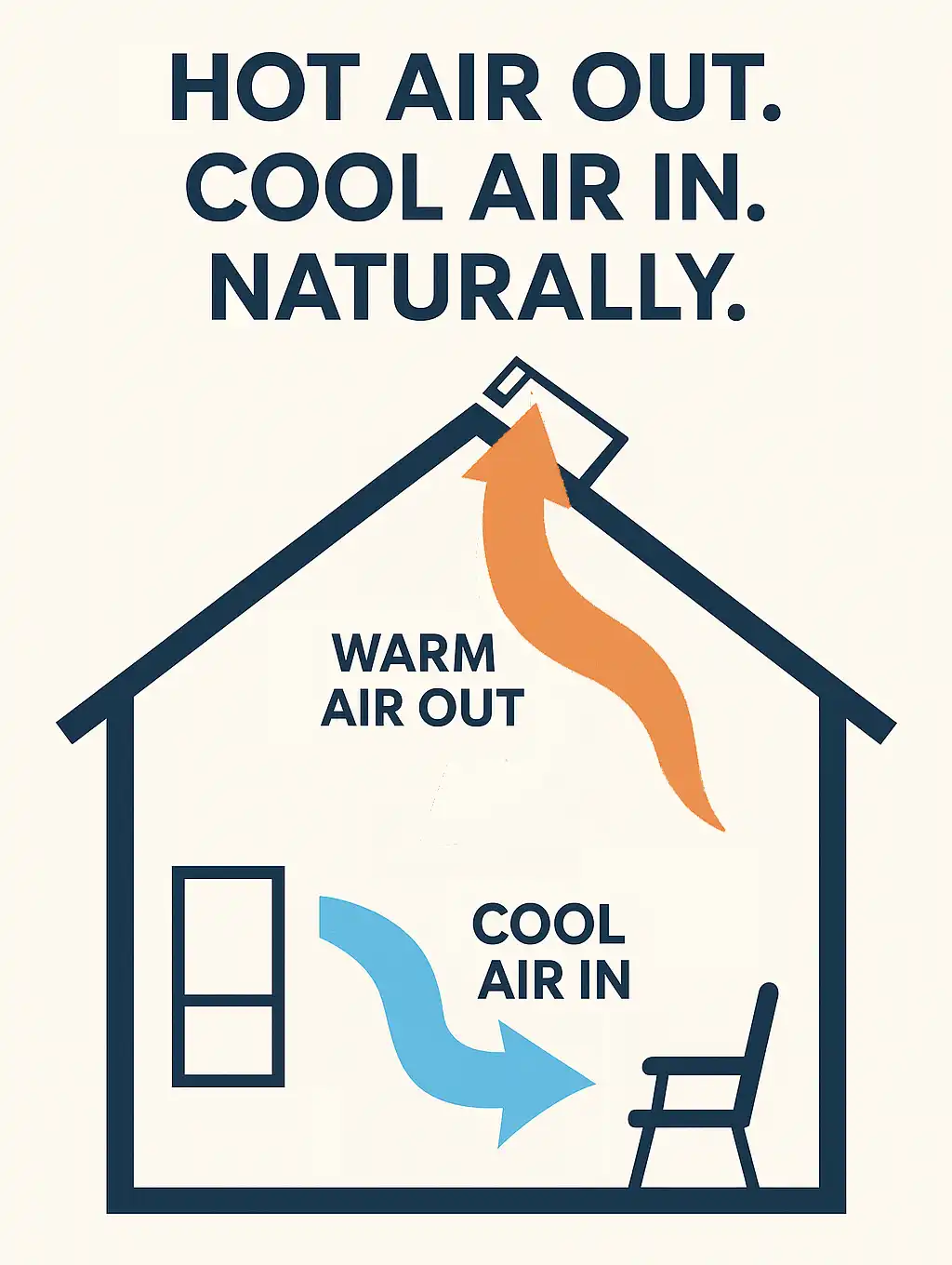
How skylights cool your home using the natural chimney effect.
Here’s the magic: Hot air rises. By installing a skylight at the highest point inside your home, you create a “chimney effect” — pulling heat upward and releasing it outside. Cool air is drawn in from lower windows or doors, making your space naturally cooler without cranking the A/C.
Benefits include:
Lower energy costs
Fresher indoor air
Reduced need for artificial cooling
Enhanced indoor air quality
Types of Ventilating Skylights
First Star Exteriors recommends choosing the right skylight type based on your home’s layout and climate. Some popular options:
Top-hinged ventilating skylights (great for small rooms)
Center-pivot skylights (easy to clean, great airflow)
Electric or solar skylights (perfect for hard-to-reach areas)
Vented roof windows (ideal for attics or loft conversions)
Best Places to Install Ventilating Skylights
You’ll get the best ventilation benefits when skylights are placed in:
Kitchens (say goodbye to cooking odors)
Bathrooms (banish steam and humidity)
Living rooms with vaulted ceilings
Hallways and stairwells that lack airflow
Bedrooms to enhance sleep quality
Pro Tip: Install skylights on the roof’s north-facing side if you want consistent, soft light without overheating your space.
Key Benefits of Using Skylights for Ventilation
Natural cooling: Beat the summer heat without overworking your air conditioner.
Better indoor air quality: Let out indoor pollutants, moisture, and stale air.
Energy efficiency: Reduce reliance on mechanical systems.
Increased property value: Well-designed skylights can make your home feel bigger, brighter, and more luxurious.
Common Misconceptions About Skylights
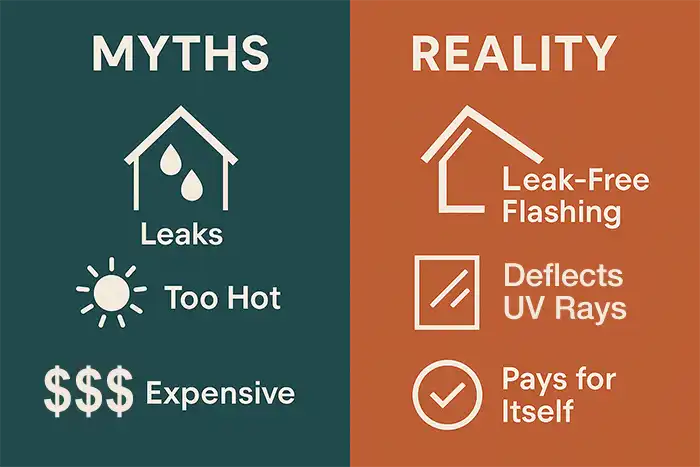
Don’t let outdated myths keep you from upgrading your home.
Ever heard that skylights always leak? That’s outdated! Modern skylights, especially those installed by experts like First Star Exteriors, are designed with superior flashing systems that virtually eliminate leaks.
Other myths debunked:
They cause too much heat: Proper shading or glass options prevent overheating.
They are hard to clean: Today’s skylights often come with easy-clean coatings.
They are expensive: They often pay for themselves with energy savings.
Important Factors to Consider Before Installing Skylights
Bigger isn’t always better! Skylight size should ideally not exceed 5% of the floor area in rooms with lots of windows or 15% for rooms with few windows.
Manual vs. Electric Ventilating Skylights: Which One Is Better?
Feature
Manual Skylights
Electric/Solar Skylights
Operation
Hand-crank or pole
Remote, switch, or smart automation
Installation Cost
Lower
Higher
Convenience
Moderate
Very High
Best for
Easy-to-reach locations
Hard-to-reach or luxury homes
How to Maintain Your Ventilating Skylights
Maintenance isn’t as scary as it sounds. Just follow these simple tips:
Clean the glass twice a year with a mild soap solution.
Inspect seals and flashing for cracks or wear annually.
Test opening mechanisms to ensure smooth operation.
Check for blockages in drainage channels.
When you work with First Star Exteriors, we also offer professional skylight maintenance services to keep everything in tip-top shape!
Wrong placement: Leads to overheating or poor ventilation.
Ignoring flashing kits: Essential for preventing leaks.
Underestimating roof slope: Impacts drainage and effectiveness.
Energy Efficiency Tips for Skylights
Install solar shades or blinds.
Choose Low-E glass to reduce heat transfer.
Consider solar-powered models to cut down on electrical costs.
Can Skylights Really Replace Mechanical Ventilation?
Short answer: In some cases, yes! Especially in temperate climates, strategic skylight ventilation can reduce or even eliminate the need for mechanical systems during parts of the year.
Smart Skylights: The Future of Ventilation
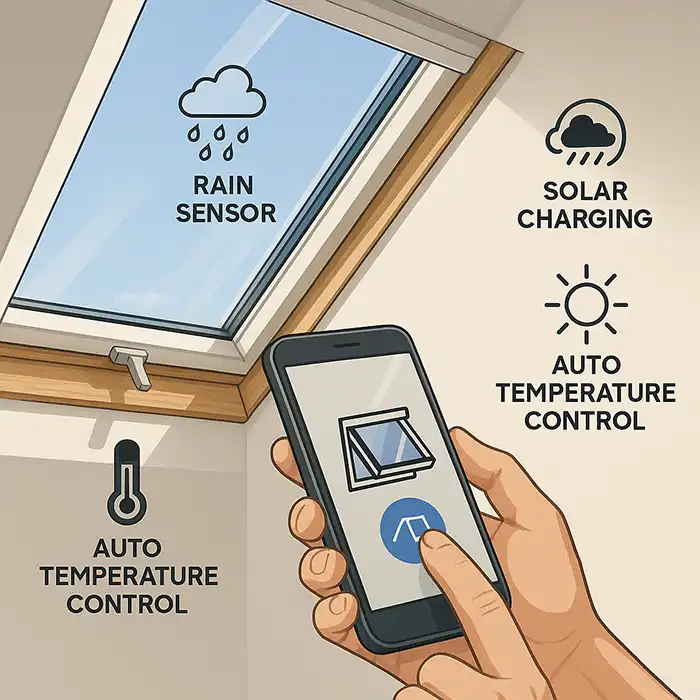
Control your skylight from anywhere with smart features.
Smart skylights come equipped with rain sensors, solar-powered batteries, and apps that let you control airflow from anywhere. Brands like VELUX have paved the way, and at First Star Exteriors, we can help integrate these high-tech solutions into your home.
Frequently Asked Questions
Can skylights leak during heavy rain? Not if professionally installed! Modern skylights feature advanced flashing systems.
Are ventilating skylights energy-efficient? Absolutely. They can significantly reduce the load on your air conditioning system.
Do electric skylights require special wiring? Sometimes. Solar-powered options avoid this completely.
How long does installation take? Typically 1–2 days with experts like First Star Exteriors.
Will skylights make my home hotter? Proper placement and glazing choices prevent excessive heat gain.
Can I add a ventilating skylight to an existing roof? Yes! Retrofits are common, especially with expert installers.
Conclusion: Let Your Home Breathe Naturally
Ventilating skylights aren’t just a pretty addition to your roofline — they’re a smart, energy-saving investment that improves your home’s comfort and air quality. With the right planning and professional help, they can transform any space into a bright, breezy haven.
At First Star Exteriors, we specialize in designing and installing premium skylight solutions that match your lifestyle and enhance your home’s value. Whether you’re looking for manual, electric, or fully smart skylights, our team has you covered.
Ready to experience the natural magic of skylight ventilation? Contact First Star Exteriors today for a free consultation!