


If you’re considering solar panels, one of the first questions to ask is: Is my roof ready for solar? While solar technology continues to advance, your system is only as strong as the structure beneath it. That’s why residential roofing plays a critical role in the success and longevity of any solar installation. Before panels are mounted, it’s important to evaluate your roof’s age, condition, structural integrity, and remaining lifespan. Here, we’ll provide insight as to how solar and residential roofing work together to help you avoid costly repairs and ensure your home is truly prepared for installation.
Quick Overview: Is Your Roof Ready for Solar Panel Installation?
Your roof’s age matters. Solar panels last 25 to 30 years, so your roof should have at least 10+ years of remaining lifespan before installation.
Structural integrity is essential. The roof must be able to support the added weight of solar panels (about two to four pounds per square foot) without sagging or weakening.
Damage should be repaired first. Leaks, soft decking, missing shingles, or moisture issues should be addressed before mounting solar equipment.
Roof type and sun exposure affect performance. Asphalt shingles and metal roofs are typically ideal, and south-facing roofs with minimal shading produce the best results.
Replacing your roof before solar can save money long-term. Installing solar on an aging roof may require costly panel removal and reinstallation later.
How Do You Know If Your Roof Is Ready for Solar Panels?
Although it’s important to ask your contractor if your roof can support solar panels, there are a few general indications that it should be doable. A roof can typically support a solar system if it’s structurally sound, relatively new (or mid-life), free of major damage, and capable of supporting the additional weight of solar equipment. A professional roof inspection, however, is still strongly recommended before installation. This will assess the roof’s condition for solar panels beforehand and can help you avoid costly mistakes. Some of the most important things that should be assessed include the following:
1. Check Your Roof’s Age and Remaining Lifespan
Solar panels typically last 25 to 30 years. If your roof will need replacement in the next five to 10 years, it’s usually smarter to replace it first. Otherwise, you may incur unnecessary long-term costs. Here’s a general guideline of the average life of a roof, and when each material should undergo a roof replacement:
Asphalt shingles: 20 to 30 years
Metal roofing: 40 to 70 years
Tile roofing: 50+ years
Flat roofing systems: 20 to 30 years (varies by material)
If your roof is already halfway through (or near the end of) its expected lifespan, installing solar panels now could mean paying to remove and reinstall the panels later, which can add significant labor costs.
2. Confirm Structural Integrity and Load Capacity
Solar panels don’t weigh a massive amount individually, but collectively they add extra load to your roof. On average, solar panels add about two to four pounds per square foot. Most modern homes are built to handle this, but older homes may need structural evaluation. A professional roof inspection will determine if your home is suitable for solar, based on assessing:
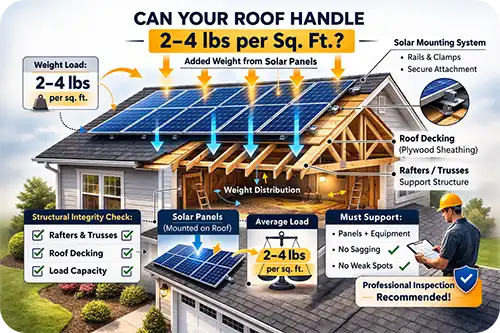
✓ Rafters or trusses
✓ Roof decking condition
✓ Wind load rating
✓ Snow load requirements (if applicable)
3. Look for Any Signs of Existing Roof Damage
Solar panels should not be installed on a damaged roof. Mounting equipment seals into the roofing system, so existing issues can become bigger problems later. Some things that indicate your roof isn’t ready for solar energy panels include:
✓ Active leaks or water stains
✓ Missing, cracked, or curling shingles
✓ Rotting or soft decking
✓ Mold or moisture issues in the attic
✓ Sagging rooflines
If repairs are needed, make sure they’re completed before you start a new solar project.
4. Evaluate Roof Orientation and Shading
While not a structural issue, roof position affects whether solar is practical and cost-effective. Even if everything looks great, if your roof doesn’t really get much sun exposure, the cost of rooftop solar installation may not be worth the return on solar power you receive. For optimal conditions, your roof should:
✓ Face south (southwest and southeast also work well)
✓ Have minimal shading from trees, chimneys, or nearby buildings
✓ Have an adequate usable surface area
Heavy shade reduces solar efficiency, which can impact long-term savings from this exterior upgrade. Your solar installer can also help you determine the best location for a solar system’s panels and whether installation is worth it.
Should You Replace Your Roof Before Installing Solar?
If your roof will likely need replacement within the next decade, replacing it before installing solar is often more cost-effective. Removing and reinstalling solar panels later can add significant labor costs and complexity. However, if you want to go solar now and your roof is in good condition, you can theoretically still move forward with the project.
What Type of Roof Is Best for Solar Panels?
Not all materials are considered the best for solar installation, but many common residential roofing systems are compatible with the right mounting hardware. In general, asphalt shingle roofs are considered one of the best roofing materials for solar panels. They’re also the easiest to install while still being both durable and affordable.
Metal roofs are also excellent for solar. In many cases, panels can be clamped onto the seams without penetrating the roof surface, reducing the risk of leaks. Tile roofs (such as clay or concrete) can support solar panels, but installation is typically more complex and may require additional labor to avoid cracking tiles. Flat roofs can also work well, using angled racking systems to position panels for optimal sun exposure.
Will Solar Panels Damage Your Roof?
When installed correctly by licensed professionals, solar panels should not damage your roof. Improper installation, however, can lead to roof leaks or structural issues if flashing and waterproofing are not handled properly. Solar panels can be installed as a DIY project, as many of the components can be bought without special licensing. However, you may forfeit the warranty if you forego a residential solar contractor in hopes of saving some money. You also need to ensure that you have proper permits (if applicable) for high-efficiency solar panels.
Roof Inspection Checklist Before Solar Panel Installation
To reiterate, your roof needs to have a professional inspection before getting solar panels installed. To help ensure you have everything evaluated, review this checklist:
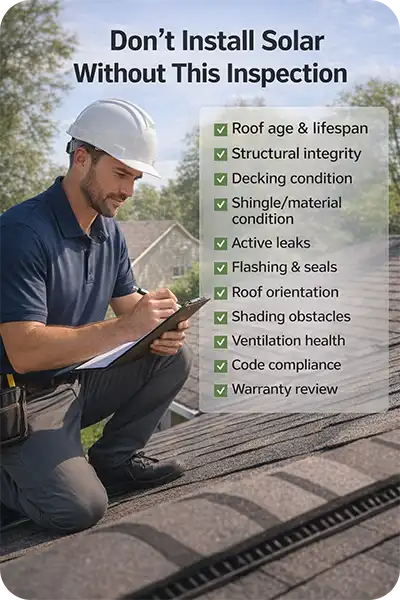
Roof age and remaining lifespan: Confirm how old the roof is and whether it has at least 10+ years of useful life remaining.
Structural integrity: Inspect rafters, trusses, and decking to ensure the roof can support the additional two to four pounds per square foot that solar panels typically add.
Roof decking condition: Check for soft spots, rot, sagging areas, or signs of weakened structural support.
Shingle or roofing material condition: Look for cracked, curling, brittle, or missing shingles; damaged metal panels; or broken tiles.
Active leaks or moisture intrusion: Inspect for attic water stains, mold growth, deteriorating underlayment, or compromised waterproof barriers.
Flashing and seal integrity: Evaluate flashing around chimneys, vents, skylights, and other penetrations to ensure watertight protection.
Roof pitch and orientation: Confirm that the slope and direction of the roof are suitable for optimal solar energy production.
Shading obstacles: Identify trees, nearby structures, chimneys, or roof features that may reduce efficiency.
Ventilation system health: Ensure proper attic airflow to protect long-term roof performance and prevent heat or moisture buildup.
Local building code compliance: Verify the roof meets structural and load requirements in your area. Obtain the necessary permits for a solar project if applicable.
Warranty considerations: Review the roofing manufacturer’s warranty terms to ensure solar mounting won’t void coverage.
Permit and HOA requirements: Confirm any community or municipal approvals needed before installation.
It’s also important to find a reputable solar panel installation company to partner with, as this can make a significant difference in quality and longevity.
How to Prepare Your Roof for Solar Installation
Even if your roof is suitable for solar panels, it might not be ready for installation just yet. To make sure that solar panels are installed in a way that doesn’t jeopardize the safety or structure of your home, it’s important to work with a licensed professional to undergo a roof inspection and any necessary roof repairs first.
The team at First Star Exteriors can evaluate your roof’s condition, recommend repairs or replacement if needed, and ensure your home is fully prepared for a seamless solar installation. Contact First Star Exteriors today to schedule a free inspection and take the first step toward a safer, smarter solar upgrade.


