
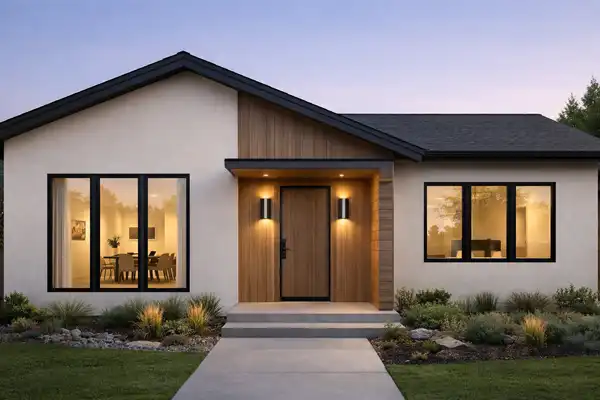
2026 home exterior design trends are reshaping how homeowners think about curb appeal and long-term value. Rather than focusing on purely decorative updates, today’s exterior upgrades are centered on performance-driven improvements, especially when it comes to windows and doors or residential siding. These core exterior elements play a major role in how a home looks, functions, and withstands changing weather conditions. Here, we’ll go over some of the most notable trends to watch for.
Quick Overview: 2026 Home Exterior Design Trends
2026 home exterior design trends prioritize performance and long-term value, with a strong focus on upgrading key elements like windows and doors and residential siding rather than purely decorative changes.
Sustainability and durability are foundational, driving increased use of eco-friendly materials such as fiber cement siding, natural stone, insulated systems, and climate-resilient exterior solutions.
Mixed materials and warmer color palettes are redefining curb appeal, blending wood, stone, metal, and brick with earthy neutrals, intentional dark accents, and Scandinavian-inspired minimalism.
Smart technology is becoming a seamless part of exterior design, with integrated lighting, security systems, solar features, and energy-ready infrastructure enhancing efficiency without visual clutter.
Homeowners are modernizing through strategic, phased upgrades, using targeted improvements like paint, lighting, selective material accents, and partial repairs to refresh exteriors without full renovations.
Modern Exterior Design Trends Defining Homes in 2026
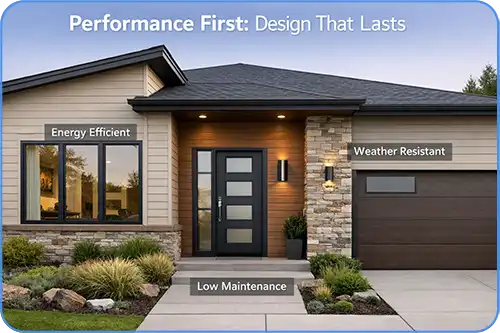
Modern home exterior ideas for 2026 are rooted in simplicity, balance, and intentional design. Rather than ornate detailing or overly trendy finishes, contemporary home exterior styles focus on architectural clarity and thoughtful material selection. This can take the form of things like:
✓ Clean lines and streamlined forms
✓ Neutral, nature-inspired color palettes
✓ Textural contrast instead of decorative excess
✓ Seamless integration of technology and sustainability
✓ To gain some inspiration for your home, consider the following 2026 exterior design trends.
Sustainable and Eco-Friendly Home Exterior Design
For many people, sustainability is no longer optional; it’s foundational. Eco-friendly home exteriors are one of the most influential exterior design trends for 2026, driven by both environmental responsibility and long-term cost savings. Luckily, there are several things you can do to upgrade your interior and exterior into a modern design that helps reduce your carbon footprint. Some of the most notable include:
✓ Fiber cement siding for long-lasting durability, fire resistance, and reduced maintenance
✓ Reclaimed or responsibly sourced wood that adds warmth while lowering environmental impact
✓ Natural stone exterior elements for timeless curb appeal and exceptional longevity
✓ Brick with improved insulation performance to enhance energy efficiency and temperature regulation
✓ Energy-efficient insulated siding systems that help reduce heat loss
✓ Reflective roofing materials designed to minimize heat absorption in warmer climates
✓ Weather-resistant exterior materials engineered to withstand extreme temperatures, moisture, and storms
✓ Climate-resilient exterior solutions that lower long-term maintenance costs and improve resale value
Mixed Materials Are the New Standard
Another interesting shift in design choices from upcoming 2026 trends includes the use of mixed-material home exteriors. Instead of using a single finish, designers are starting to layer different options to add depth and texture to otherwise simple home styles. Some of the most popular pairings to watch for include:
✓ Wood and stone exterior homes for warmth and contrast
✓ Metal siding combined with natural wood for a modern-industrial look
✓ Brick accented with fiber cement panels for balance
✓ These textured-driven facades create interest even in minimalist palettes, making them ideal for modern curb appeal.
Exterior Color Trends for 2026 Homes
As homeowners move into 2026, one of the most notable shifts in exterior home design is overall home and siding colors. The colors of the year are things such as soft olives and beige, with gray colors being used less frequently. These warmer, earthy neutrals feel more inviting and complement exterior materials from natural wood to stone and more. Some of the most popular paint colors expected include:
✓ Soft taupe and mushroom
✓ Warm beige and sand
✓ Clay, terracotta, and muted adobe tones
✓ Greige with brown or beige undertones
These colors work especially well for modern, farmhouse, and contemporary home exteriors, offering flexibility across styles and climates. Additionally, darker house colors are likely going to remain, but potentially shift to being used more intentionally as accents or paired with the warmer tones. This is especially true regarding charcoal, forest green, and navy blue.
Minimalist and Scandinavian-Inspired Home Exteriors
Minimalist home design trends and Scandinavian influences are also shaping contemporary exteriors in 2026, with a strong emphasis on function, craftsmanship, and simplicity. These styles favor clean rooflines, limited color palettes, and the thoughtful use of high-quality materials rather than decorative excess. Proportion and natural light play a key role in the overall design, creating exteriors that feel intentional, balanced, and refined. The result is a calm, modern aesthetic that enhances curb appeal while aging gracefully over time.
Smart Exterior Features and Technology Integration
Smart exterior home features are no longer an afterthought or purely functional add-ons. Today, technology is being intentionally woven into exterior design to enhance safety, efficiency, convenience, and overall curb appeal without compromising the visual integrity of the home. Today’s smart exterior solutions are designed to be integrated and architecturally cohesive.
As homeowners place greater value on energy efficiency, security, and ease of use, smart technology is becoming a natural extension of modern exterior design rather than a separate upgrade.
Lighting, Security, and Entry Systems
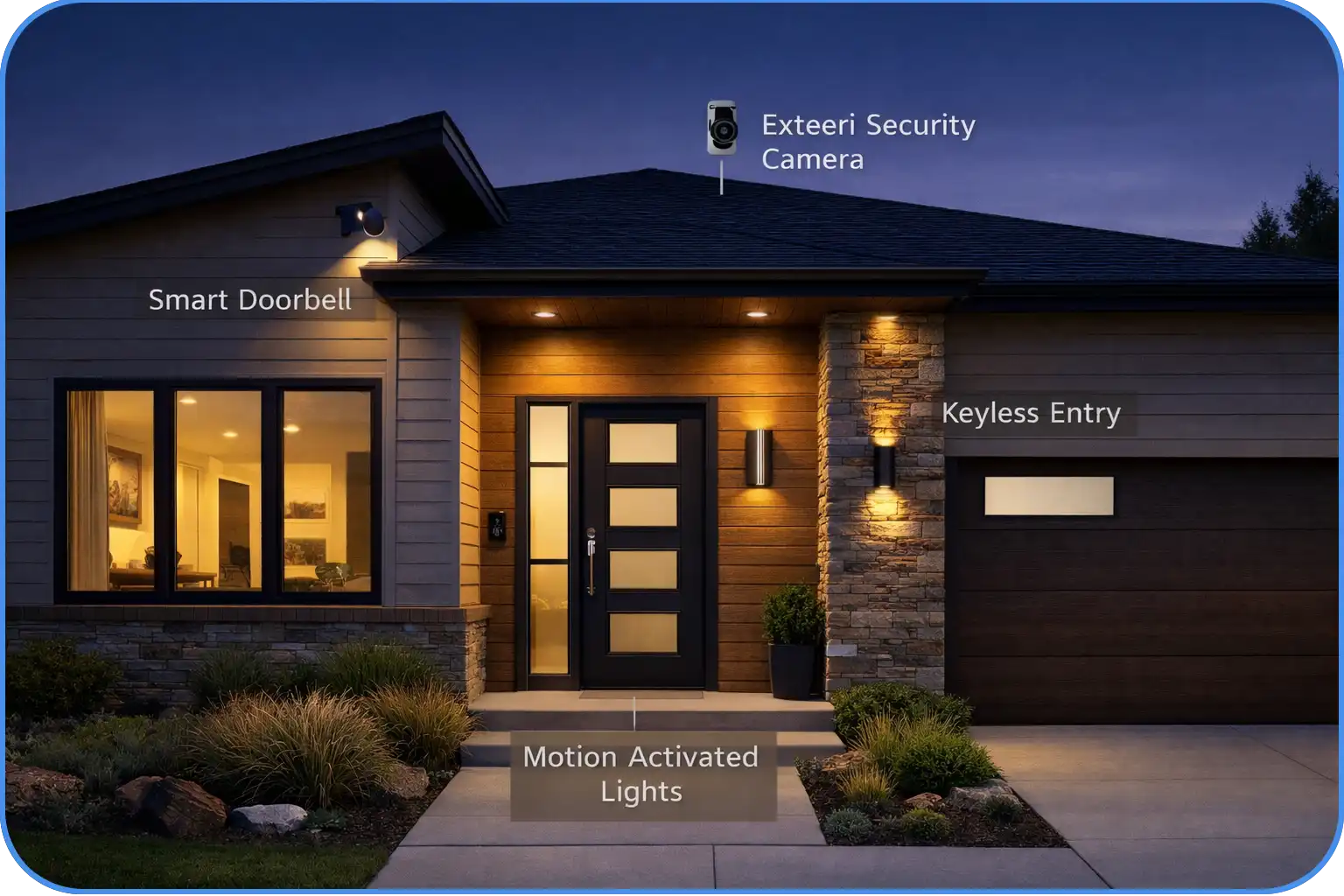
Motion-sensing lighting is now more precise and energy-efficient, activating only when needed while providing added safety and visibility. These systems are often programmable, allowing homeowners to adjust brightness, timing, and zones based on daily routines or seasonal changes.
Smart doorbells, exterior cameras, and access controls are also becoming more discreet in design, blending seamlessly into facades, entryways, and landscaping. Automated gates, smart locks, and keyless entry systems offer enhanced security and convenience while supporting a clean, uncluttered exterior aesthetic. Together, these features improve peace of mind without introducing visual clutter or detracting from the home’s architectural style.
Solar and Energy Technology Built Into the Exterior
Energy technology is also playing a larger role in exterior design as homeowners seek long-term sustainability and cost savings. Solar-integrated home exteriors are becoming more refined, with solar roofing, facade panels, and concealed systems that generate energy without the bulky appearance traditionally associated with solar installations.
Home designs are also starting to integrate features that anticipate future energy needs, such as integrated EV charging stations and energy-efficient electrical infrastructure. Although these types of upgrades can be a bit of an upfront investment, there are several long-term savings that will continue to exist well beyond 2026.
How to Modernize Your Home Exterior for 2026
Modernizing your home exterior doesn’t require a full-scale remodel. Many of the most impactful 2026 exterior design upgrades focus on targeted improvements that refresh curb appeal, improve functionality, and update style without major construction or disruption. For homeowners looking to upgrade without overcommitting, these strategic changes offer the best return.
High-Impact Exterior Updates That Don’t Require Major Renovation
✓ Small, intentional updates can dramatically change the look of a home exterior. Some of the most effective options include:
✓ Refreshing exterior paint using warm neutrals, earthy tones, or deep modern colors
✓ Updating trim and accent colors to create contrast and highlight architectural features
✓ Replacing outdated house numbers, door hardware, and mailboxes with modern designs
✓ Upgrading garage doors or front doors for an immediate visual improvement
✓ These changes help older homes feel current without altering their structure.
Selective Material Upgrades for a Modern Look
Rather than replacing all exterior materials, homeowners are opting for selective mixed-material accents in key areas. This approach adds depth and character while keeping costs manageable. Popular targeted material upgrades include:
✓ Wood or composite panels around entryways
✓ Stone veneer or textured masonry on lower facades
✓ Metal accents on garage doors, awnings, or rooflines
✓ Vertical siding panels to modernize traditional layouts
✓ Even small material additions can elevate curb appeal when placed intentionally.
Lighting & Details That Make a Big Difference
Exterior lighting and finishing details are often overlooked, yet they have a major impact on both appearance and usability. Simple upgrades include:
✓ Replacing dated fixtures with modern exterior lighting
✓ Adding pathway or landscape lighting for depth and safety
✓ Installing smart or motion-activated lights near entry points
✓ Updating shutters, railings, or porch columns with cleaner profiles
✓ These details help create a cohesive, well-designed exterior without major expense.
When to Repair vs. Replace Exterior Elements
Knowing when to repair something vs. when to replace it is key when avoiding a full renovation. Many homeowners are choosing partial updates to extend the life of existing materials. Still, it’s important to consider the following:
✓ Repairing and repainting siding or trim that’s still structurally sound
✓ Replacing only the most visible or weathered areas of siding or fascia
✓ Upgrading insulation or weatherproofing during small-scale exterior work
If you’re not sure about whether you should repair something in your home or have it replaced, it’s always best to schedule a consultation with an expert.
Designing a Timeless Exterior in 2026
Today’s exterior design trends favor intentional, phased improvements over all-at-once renovations. Rather than replacing everything at once, homeowners in 2026 are choosing strategic upgrades that deliver immediate curb appeal, improved performance, and long-term value without the stress, cost, or disruption of a full remodel.
If you’re ready to refresh your home’s exterior but aren’t sure where to start, working with experienced professionals can make all the difference. First Star Exteriors specializes in home exteriors and can help you make strategic upgrades that are within your budget. Contact First Star Exteriors today to explore exterior solutions that bring your 2026 exterior vision to life.