

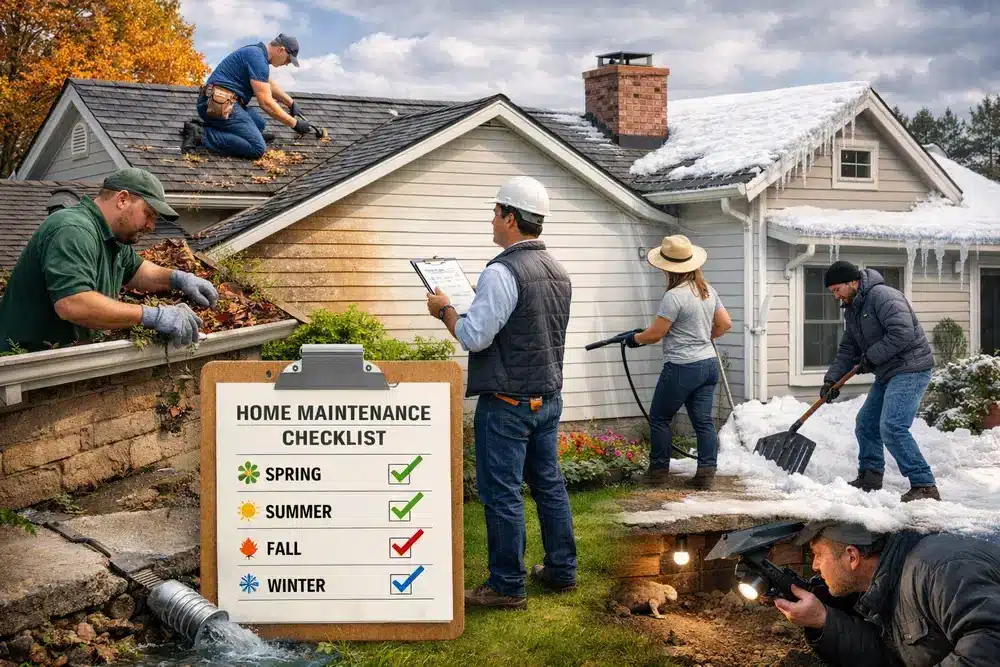
Exterior home maintenance checklist routines help you stay ahead of seasonal wear and tear, protecting your home from costly damage and preserving its long-term value. Here, we’ll go over some of the most essential action items to do to your residential roofing, siding, gutters, and more each season to stay organized and proactive, while prioritizing the safety of your home.
Quick Overview: Exterior Home Maintenance Checklist by Season
- Exterior home maintenance helps prevent costly repairs by catching small issues early and protecting your roof, siding, gutters, and foundation year-round
- Seasonal checklists keep you organized and proactive, with spring and fall focused on inspections, summer on cleaning and sealing, and winter on monitoring damage
- Neglecting maintenance can lead to serious problems like water damage, mold, pest intrusion, and structural issues that are expensive to fix
- Routine upkeep extends the lifespan of your home’s exterior while improving curb appeal and preserving long-term property value
- A mix of DIY tasks and professional inspections ensures your home stays safe, efficient, and well-maintained through every season
What Is Exterior Home Maintenance and Why Is It Important?
Exterior home maintenance refers to the routine inspection, cleaning, and repair of everything on the outside of your home. This includes key structural elements like your roof, siding, gutters, foundation, windows, doors, and drainage systems. At its core, maintaining your exterior is about keeping your home protected through proactive measures that keep things working properly.
The Cost of Neglecting Exterior Home Maintenance
Skipping regular upkeep and routine maintenance might save you time in the short term, but it often leads to higher expenses down the road. For example:
- Clogged gutters can cause water to overflow and damage your roof, siding, and foundation
- Roof damage left unaddressed can lead to leaks and interior water damage
- Cracks in siding or foundation can allow moisture and pests into your home
- Poor drainage can weaken your home’s structural integrity over time
These issues are not only expensive to fix, but they can also impact your home’s safety and long-term value.
Benefits of a Seasonal Home Maintenance Schedule
There are several benefits to working through a seasonal home maintenance checklist yearly, and doing so can help you preserve your home’s value. Some of the most notable benefits of keeping up with various tasks include:
- Prevents costly repairs by catching issues early
- Extends the lifespan of your roof, siding, and other exterior materials
- Improves curb appeal, which is especially important if you plan to sell
- Protects your home’s value and structural integrity
- Helps you plan for seasonal weather changes
The Importance of Maintaining Your Home Throughout the Year
Seasonal maintenance tasks may seem like just another thing to add to your list, but they can save money and keep your home safe in the process. Some tasks can be done yourself, while others may require that you hire a professional. Still, you can use this checklist to help ensure your house is in good condition for years to come.
Spring Home Maintenance Checklist
As a homeowner, spring is the perfect time for home maintenance tasks and DIY projects. Ideally, this season should focus on making sure that everything’s in working order after the winter months and getting your space ready for the upcoming heat. Some of the most important items on your spring to-do list include the following:
Inspect Your Roof After Winter
Winter weather can be tough on roofing materials, making spring the ideal time for a close inspection.
- Look for missing, cracked, or curling shingles
- Check for signs of roof leaks or water stains in the attic
- Inspect flashing around chimneys and vents for damage
- Scan for debris buildup that could trap moisture
If you notice any concerns, it’s best to address them early before spring rains make the problem worse. It may also be beneficial to hire a professional to conduct a thorough roofing inspection twice a year (in the spring and fall) to ensure that everything is in working order.
Clean and Inspect Gutters and Downspouts
Gutters often collect leaves, twigs, and debris over the winter, which can block proper drainage. Some things to do include:
- Remove all debris from gutters and downspouts
- Check that water flows freely away from your home
- Look for sagging or detached sections
- Ensure downspouts extend far enough from your foundation
Check Siding and Exterior Walls
Cold weather and moisture can cause wear and tear on your home’s exterior surfaces. A professional siding inspection can also be beneficial, in order to:
- Inspect for cracks, warping, or loose panels
- Look for signs of mold, mildew, or rot
- Check paint or finishes for peeling or fading
- Clean siding to remove dirt and buildup
Inspect Foundation and Drainage
Finally, make sure you take the time to evaluate how water moves around your home, especially if you live in an area that gets high rainfall during the spring.
- Look for cracks in the foundation
- Check for standing water or pooling near the base of your home
- Ensure the ground slopes away from your foundation
- Test drainage systems and sump pumps, if applicable
Summer Exterior Home Maintenance Checklist
Summer is the ideal time to focus on cleaning, sealing, and preventative maintenance. With longer days and generally warm weather, you have the opportunity to tackle annual projects that can protect your home year-round.
Power Wash Your Home Exterior
Over time, dirt, pollen, and grime can build up on your home’s exterior surfaces, making summer the perfect time for a deep clean. Although power pashing is a great option, it’s also important to be mindful of pressure settings to avoid damaging materials. This is especially true for certain decking materials, which may benefit from a more gentler wash. You can also hire a professional to clean siding if you’re not sure about whether a power washer will damage materials or not. Otherwise, use the power wash on driveways, walkways, and concrete patios to refresh your space.
Inspect and Refresh Paint or Sealant
Sun exposure and fluctuating temperatures can cause paint and sealants to fade or crack. During the summer, add a maintenance protective coating to help prevent moisture intrusion and material deterioration. It’s also important to:
- Look for peeling, bubbling, or faded paint
- Check caulking around windows and doors for cracks
- Repaint or touch up areas as needed
- Reseal wood surfaces like decks and trim
Check Windows and Doors for Air Leaks
If you live in an area where seasons tend to be a bit more extreme, you know that drafts can be just as frustrating in summer as in winter. Sealing gaps is essential for energy efficiency and comfort, so take the time to inspect current seals and weatherstripping and re-caulk around frames if necessary. It’s also a great time to clean window tracks and screen, just make sure to turn off the air conditioning beforehand to save energy.
Maintain Landscaping Around the Home
Although you may think that landscaping is purely aesthetic, it plays a bigger role in home maintenance than you might think. Overgrown trees and shrubbery can damage your roof and siding, trap moisture, and clog your irrigation system, so it’s worth taking the time to trim and maintain the greenery around your property.
Inspect Roof and Attic Ventilation
Heat buildup can impact both your roof and your home’s interior, while proper ventilation helps regulate temperature and extends the life of your house. Some of the most important things to do to stay on top of maintenance include:
- Check for signs of heat damage or warped shingles
- Ensure attic ventilation is functioning properly
- Look for signs of trapped moisture or poor airflow
- Confirm vents are clear of debris
Check for Pests
Warmer weather can often bring an increased activity of pests, especially rodents. Take the time to check for any signs of insects or rodents around your foundation, and if you notice an indication of a problem, it’s best to call a professional.
Fall Home Maintenance Checklist
As temperatures drop and leaves begin to fall, your focus should shift to getting your home ready for colder weather and preventing issues that can worsen during winter. Here are some tasks that help prioritize preparation and protection for upcoming weather changes.
Clean Gutters and Downspouts Again
Although pesky, this is one of those tasks that should be done at least twice a year. In the fall, removing leaves, twigs, and debris from the gutter and ensuring downspouts are flowing freely can help keep them clear and in working condition when temperatures drop. This, in turn, helps prevent ice dams and water overflow during the winter.
Inspect Roof and Prepare for Cold Weather
Again, a roof inspection can be helpful before winter, so scheduling one in the spring and one in the fall is recommended. This will allow you to address any minor repairs or problems before winter storms arrive.
Winterize Outdoor Plumbing
Freezing temperatures can cause pipes to burst if they aren’t properly prepared. Therefore, winterizing your plumbing is a great action item to help avoid problems down the line. Some ways to do this for outdoor pipes include:
- Drain and disconnect garden hoses
- Shut off exterior water valves
- Insulate exposed pipes
- Store outdoor faucets and equipment properly
Winter Exterior Checklist
Winter exterior home maintenance should focus on monitoring, protecting, and preventing damage during the harshest months of the year. If you live in especially harsh climates, winter is the time to stay vigilant; keeping an eye on how snow, ice, wind, and freezing temperatures impact your home. Some of the most important things to do during this time include the following:
- Monitor for ice dams and snow buildup on the roof
- Check for signs of roof leaks or interior water damage
- Keep gutters and downspouts clear when safe to do so
- Inspect siding and exterior walls after storms
- Watch for drafts and heat loss around windows and doors
- Check attic ventilation and insulation performance
- Keep walkways, driveways, and entry points clear of snow and ice
- Inspect exterior vents and exhaust outlets for blockages
- Check for pest entry points around the home
- Monitor trees and branches for snow or ice damage
Additional Routine Home Maintenance Tips
In addition to tending to the exterior, it’s important to regularly check your heating and cooling (HVAC) appliances, water heater, carbon monoxide detectors, and air filters to ensure they’re functioning safely and without any issues. Clean lint from the dryers or filters, and make sure your furnace is ready before winter. If you have any issues with these things, it’s best to work with a professional to avoid potentially dangerous complications.
For help staying on top of exterior maintenance and reliable professional inspections, partner with First Star Exteriors today. Our team can help you identify issues early, protect your home year-round, and handle repairs with confidence.


