
When the temperature drops and snow begins to fall, your roof can quickly be put at risk for ice buildup. While a dusting of snow may look picturesque and seem harmless, the combination of melting and refreezing can lead to ice dams and other issues that put your roof at risk. De-icing your roof is essential to prevent structural damage and unnecessary repairs throughout the season. Whether dealing with small patches of ice or significant buildup, the following methods can help you safely de-ice your roof and keep it in good condition throughout winter.
Quick Overview: Safe Roof De-Icing Tips for Homeowners
Ice dams and roof buildup can cause major winter damage if not handled properly. To de-ice safely and protect your home from leaks and costly repairs, be sure to:
✓ Use gentle, roof-safe de-icing methods to melt existing ice
✓ Avoid metal tools or chipper shovels that damage shingles
✓ Apply calcium chloride or roof-safe de-icing products
✓ Focus on prevention through insulation and ventilation
✓ With the right steps, you can clear your roof safely and keep it protected through the coldest months.
Ice dams and roof buildup can cause major winter damage if not handled properly. Learning how to de-ice your roof safely helps protect your home from leaks and expensive repairs. The safest methods include using roof-friendly products, working from the ground, and avoiding sharp metal tools that can harm shingles. Applying calcium chloride or installing heating cables can melt problem areas gradually, while proper insulation and ventilation help prevent ice from forming in the first place. With the right approach, you can clear your roof safely and keep it protected all winter long.
Understand Why Roof Ice Is Dangerous
Ice on your roof might look harmless, but it can create serious structural problems. As melting snow refreezes near the roof edges, it forms solid ice dams that trap water. This trapped water can back up under shingles, soak into your attic, and cause leaks, mold, or wood rot.
Beyond water damage, heavy ice also adds extra weight to your roof, straining the structure. The longer ice is left to build up, the higher the chance of shingle damage or even gutter collapse. Understanding the risk is the first step toward fixing it safely. You can also learn how to spot and prevent these issues by reviewing the most common roofing problems homeowners face. According to the IBHS, ice dams are one of the top causes of winter roof damage, and early prevention is key to avoiding costly repairs.
Avoid Common De-Icing Mistakes
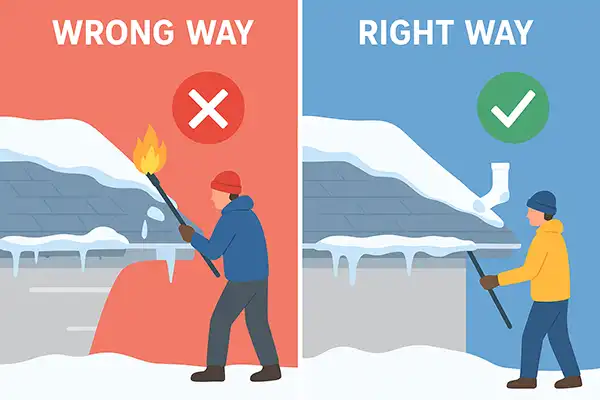
When homeowners try to remove ice quickly, they often cause more harm than good. Avoid these damaging mistakes:
Never use sharp metal tools like picks, shovels, or hammers to chip ice—these can tear shingles or puncture your roof membrane. Don’t use rock salt, which corrodes metal flashing and gutters, and skip hot water or open flames that can crack shingles and cause serious burns.
If ice is already thick or widespread, don’t risk climbing the roof—use safe, ground-level solutions or call a roofing professional. A local expert can assess your roof’s condition and recommend whether repairs or additional insulation are needed. If damage has already occurred, scheduling roof repair services as soon as possible can help prevent leaks from spreading further.
Use Roof-Safe De-Icing Methods
If you decide to de-ice on your own, stick to gentle methods designed for roof safety. Calcium chloride pellets work well when placed inside socks or pantyhose and laid across the ice dams, slowly melting channels that allow water to drain.
You can also use a lightweight aluminum or plastic roof rake to pull down loose snow from the roof edge while standing safely on the ground. Heated cables are another good option, melting problem areas evenly without damaging the roof surface. These solutions take time, but slow melting is far safer than trying to chip ice away. You can find more details about the materials involved in our guide to the basics of a home roofing system.
Improve Roof Insulation and Ventilation
Most roof ice problems start inside the attic. When warm air escapes through poor insulation, it melts snow on the roof. That meltwater refreezes at the edges where it’s colder, creating ice dams.
To prevent this, check your attic insulation and ventilation. Add insulation to reduce heat loss, and make sure vents are clear so cold air can circulate properly. This keeps your roof at a more even temperature and helps stop ice from forming again. For a deeper look at how attic airflow affects roofing performance, see our article on how to choose the right ventilation for your roof.
Know When to Call a Professional
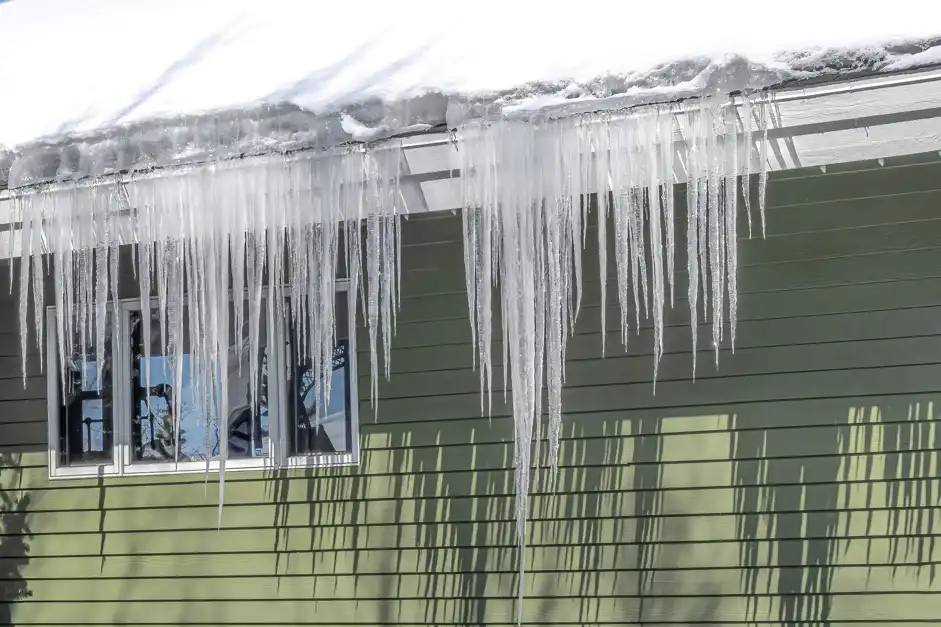
If you see large ice ridges, heavy icicles hanging from gutters, or water stains inside your home, it’s time to call a professional roofer. Experts have the equipment and safety gear to remove ice without damaging your shingles.
They can also inspect your roof for deeper issues like poor flashing, insulation gaps, or ventilation problems. Addressing these underlying causes now prevents repeat ice buildup in future winters. If your roof has already sustained weather-related damage, professional help is especially critical—learn what to look for in our guide on roof damage from ice dams.
The National Roofing Contractors Association advises homeowners to avoid walking on icy roofs and to rely on trained professionals for safe snow and ice removal. They can also inspect your roof for deeper issues like poor flashing, insulation gaps, or ventilation problems. Addressing these underlying causes now prevents repeat ice buildup in future winters
Protect Gutters and Downspouts
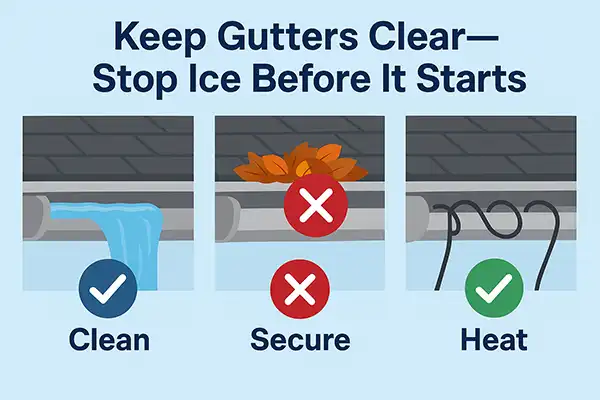
Gutters and downspouts often suffer the worst ice damage. When they’re clogged with leaves or debris, meltwater has nowhere to go and freezes in place, adding extra weight that can pull gutters loose.
Before freezing weather arrives, clean your gutters thoroughly and make sure they’re secured to the fascia. Adding gutter guards or installing heating cables helps water drain freely, reducing the risk of ice dams forming along the edges. For long-term solutions, see the differences between types of gutter guards and which ones work best in snowy climates.
Plan Ahead for Next Winter
De-icing your roof is only part of the solution. Planning ahead keeps the same problem from returning year after year. Schedule a professional inspection in the fall to identify any weak spots or poor insulation.
You can also install roof-safe heating cables, snow guards, or ice-resistant shingles for extra protection. For a complete list of things to check before winter arrives, visit our winter home maintenance checklist and stay ahead of seasonal roof care.
Final Thoughts: Stay Safe and Protect Your Roof
De-icing your roof the right way prevents leaks, preserves shingles, and extends the life of your roof. Using harsh tools or quick fixes often does more harm than good, so focus on gentle methods and long-term prevention instead.
At First Star Exteriors, we help homeowners handle winter roof issues safely and efficiently. As a family-owned company with over 25 years of experience, we specialize in roof repairs, ice dam prevention, and seasonal maintenance. Contact us today to schedule a roof inspection or request a free quote within 48 hours.